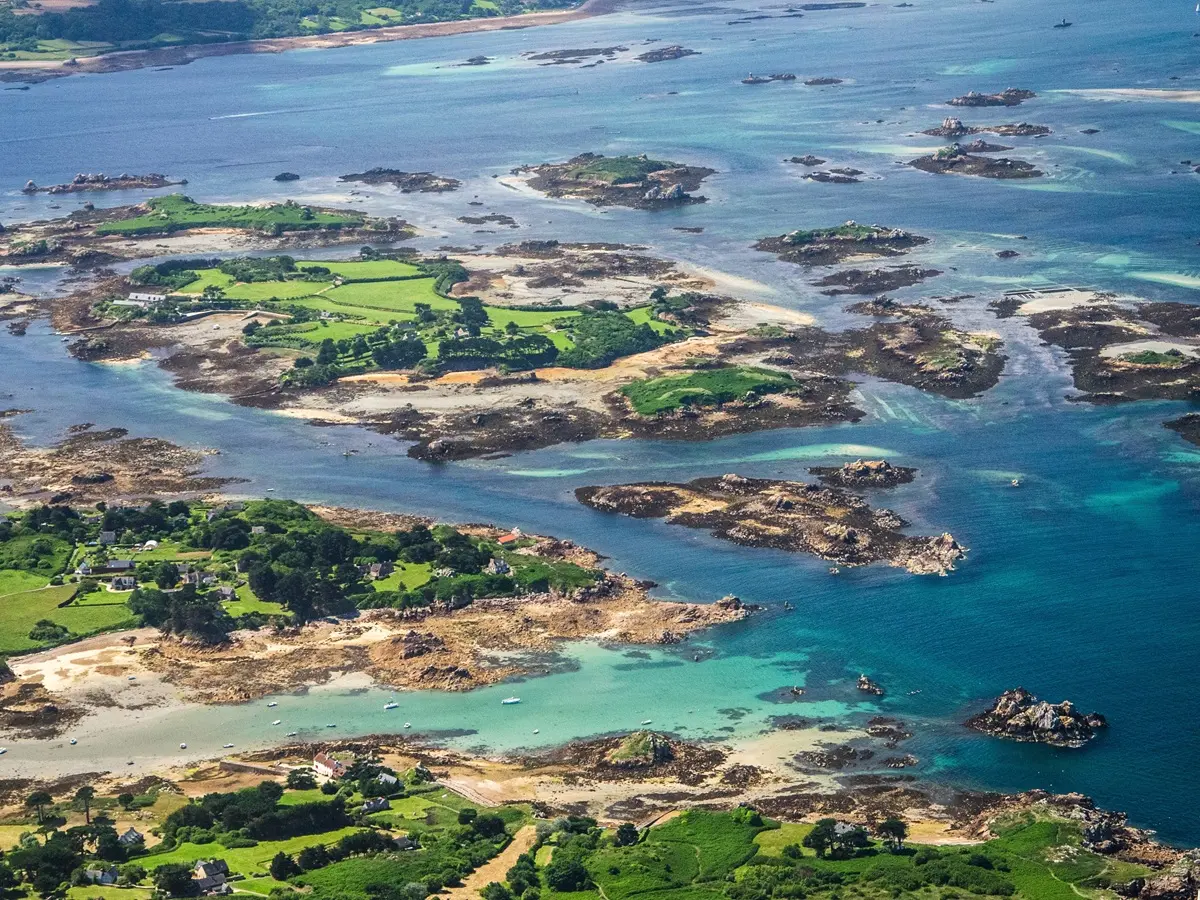
Just 28 miles off the coast of Cornwall, the Isles of Scilly feel like another world entirely.
The water is clearer. The pace is slower. The beaches are whiter. Even the light seems different.
For many people, the first sight of the islands arriving from the sea is unforgettable. After hours crossing open water from mainland Cornwall, the islands suddenly appear on the horizon with turquoise bays, rocky headlands and white sand beaches that feel far removed from the rest of Britain.
Although the Isles of Scilly are relatively close to Land’s End, they have developed their own distinct identity shaped by the Atlantic Ocean, maritime history, wildlife and an unusually mild climate. The islands have long attracted sailors, artists, naturalists and explorers looking for somewhere that feels both remote and welcoming at the same time.
Unlike many conventional sailing holidays, a voyage to the Isles of Scilly combines offshore passage making with island exploration and life aboard a yacht.
Where Are the Isles of Scilly?
The Isles of Scilly lie approximately 28 miles south-west of Land’s End in Cornwall.
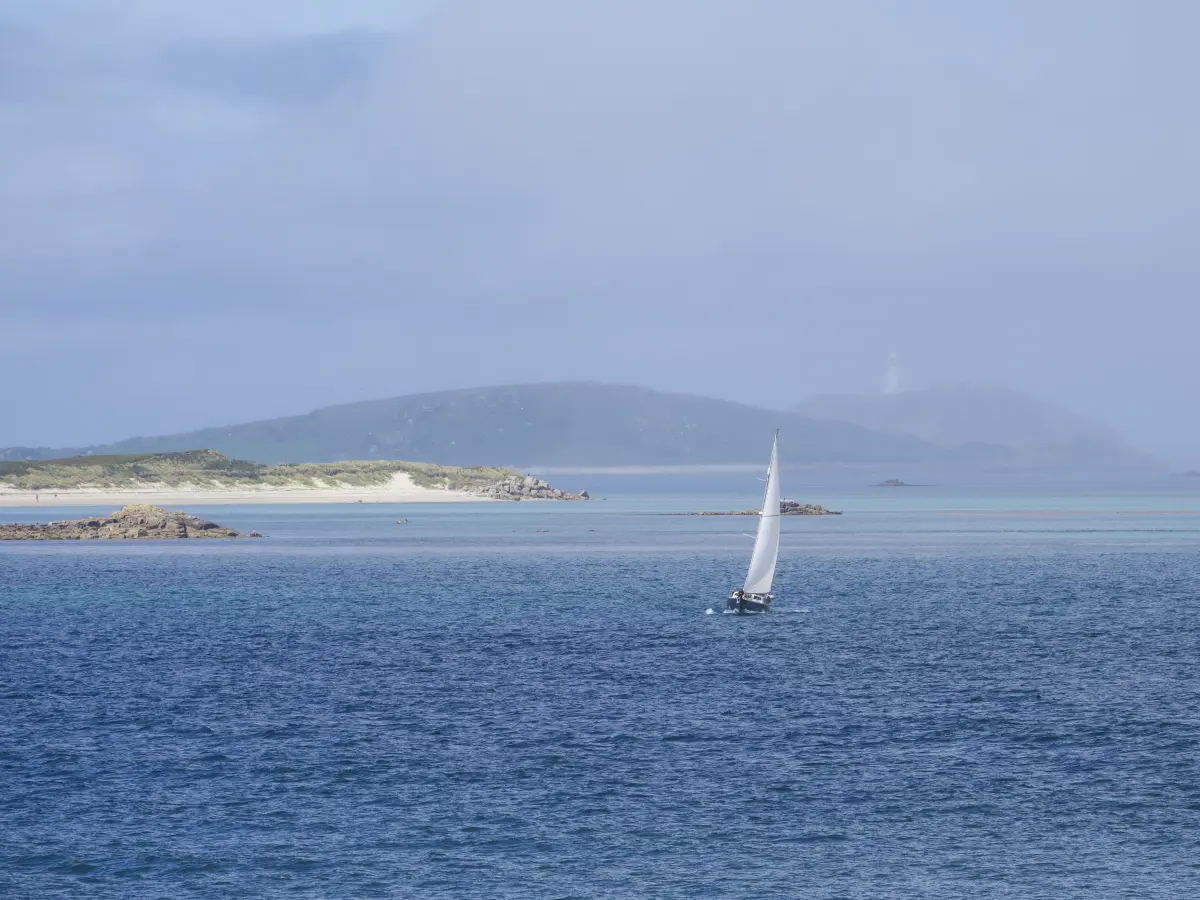
Sailing yacht in clear waters of the Isles of Scilly
The archipelago consists of more than 140 islands and rocky islets, although only five islands are inhabited year-round. Despite their relatively small size, the islands cover a surprisingly diverse landscape of sheltered anchorages, rugged Atlantic coastline, sandy beaches, heathland and subtropical gardens.
Their location gives them a feeling of remoteness that is difficult to find elsewhere in England. Once the mainland disappears over the horizon during the crossing from Cornwall, it feels very much like heading offshore rather than simply travelling between coastal towns.
That sense of separation is part of what makes the islands so memorable.
Why the Isles of Scilly Feel Almost Subtropical
One of the first things many visitors notice is that the Isles of Scilly do not feel entirely British.
Palm trees grow in sheltered spots. Flowers bloom earlier than on the mainland. Frost is rare. Even during the winter, temperatures are often noticeably milder than elsewhere in the UK.
This unusual climate is heavily influenced by the Gulf Stream, which brings relatively warm Atlantic water across the ocean towards the south-west approaches of Britain. The surrounding sea helps moderate temperatures year-round and creates conditions where plants that would struggle elsewhere in the UK can thrive.
The best-known example is Tresco Abbey Garden, where exotic plants from South Africa, Australia, New Zealand and South America grow successfully outdoors.
Agapanthus, echiums, succulents and subtropical plants appear across many parts of the islands during the summer months, giving the Isles of Scilly a character more commonly associated with destinations much further south.
Combined with the clear water and bright granite beaches, the result is a landscape that often surprises first-time visitors.
The Wildlife of the Isles of Scilly
The Isles of Scilly are internationally important for wildlife.
Their position far out into the Atlantic makes the islands an important stopping point for migratory birds, while the surrounding waters support a rich marine ecosystem.
Seals are commonly seen hauled out on rocks around the islands, particularly grey seals. Dolphins are also regularly spotted during passages to and from the islands, especially during settled summer weather.
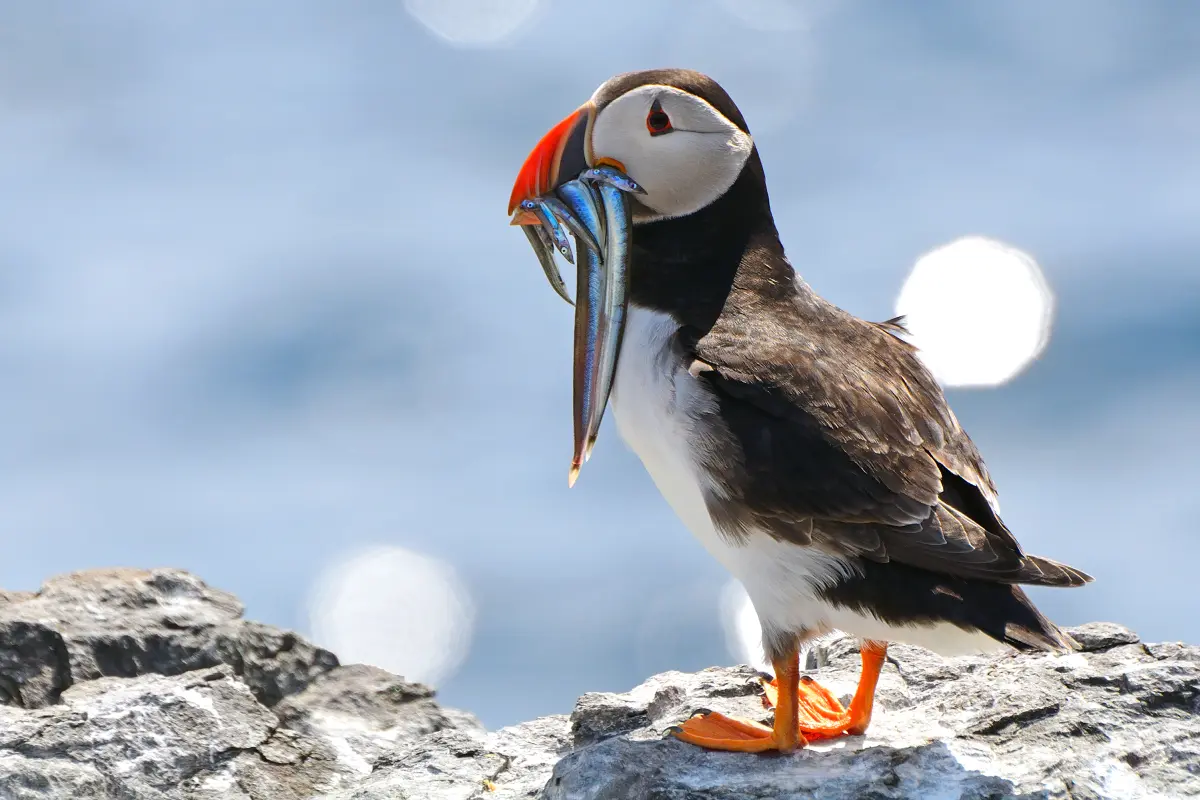
Yum yum
Birdlife is one of the great attractions of the archipelago. The islands are famous among birdwatchers because unusual migratory species are frequently recorded there during spring and autumn migrations. Puffins, shearwaters, fulmars and gannets are all associated with the waters around the islands.
The marine environment is equally impressive. The water clarity around the islands can be remarkable during calm summer periods, helping support seagrass beds and a wide range of marine life.
The islands are also home to the Isles of Scilly Wildlife Trust, which helps manage many of the uninhabited islands and conservation areas across the archipelago.
The Five Inhabited Islands
Although often spoken about collectively, each of the inhabited islands has its own character.
St Mary’s
St Mary’s is the largest and busiest island and acts as the main hub for transport, shops and services.
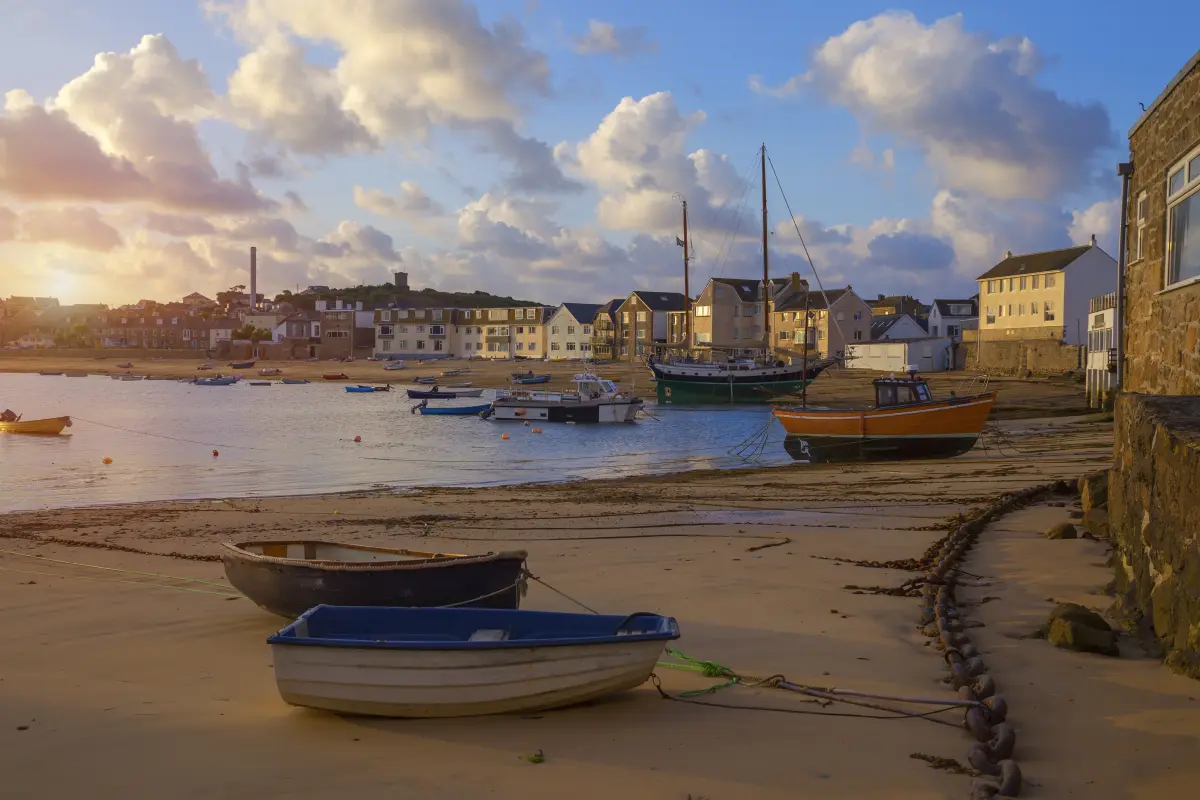
Hugh Town harbour on St Mary’s in the Isles of Scilly
Hugh Town, the principal settlement, sits between two sandy beaches and has a distinctly maritime atmosphere. Visiting yachts, fishing boats and inter-island launches all add to the sense that the sea dominates life here.
St Mary’s is usually the first stop for many visitors arriving from the mainland and provides a useful base for exploring the wider islands.
Tresco
Tresco is perhaps best known for Tresco Abbey Garden and its reputation for beautiful beaches and luxury accommodation.
The island has a quieter and more refined atmosphere than St Mary’s, with sheltered bays, clear water and attractive walking trails. From the water, the island is particularly striking because of its combination of white beaches and low green vegetation.
For sailors, the anchorages around Tresco and neighbouring Bryher are among the highlights of the entire archipelago.
St Martin’s
St Martin’s is famous for its clear water and long sandy beaches.
The island feels more exposed and open to the Atlantic than some of the others, yet still retains a peaceful atmosphere. The beaches here are often compared to those found much further south in Europe.
Many people sailing around the islands regard the waters around St Martin’s as some of the most beautiful in the UK.
Bryher
Bryher presents a completely different personality depending on which side of the island you visit.
The eastern side faces the calmer waters between the islands, while the western side faces directly into the Atlantic Ocean. During rough weather, huge waves crash onto the granite shoreline, creating dramatic scenery very different from the tranquil anchorages elsewhere nearby.
This contrast between sheltered calm and Atlantic exposure is part of what makes the Isles of Scilly so distinctive.
St Agnes
St Agnes feels wonderfully remote.
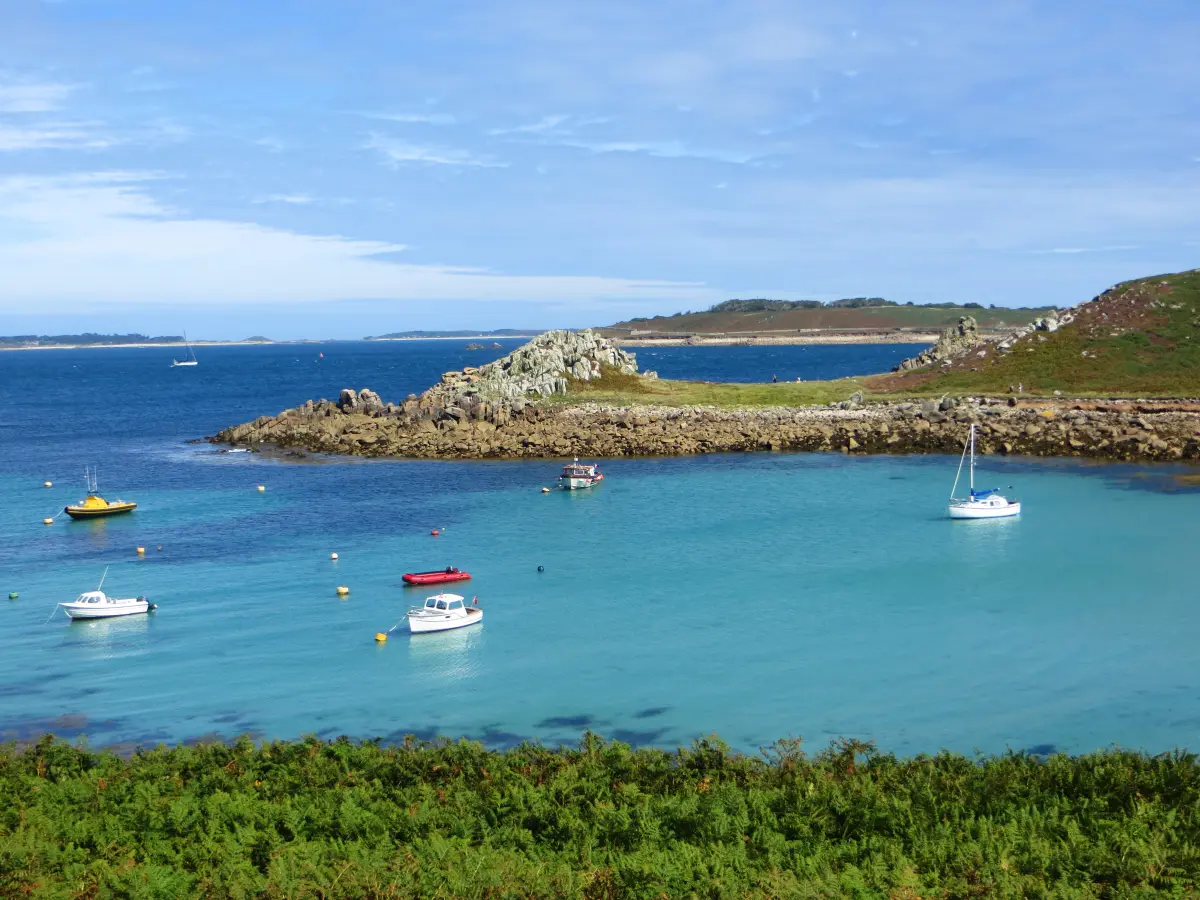
Yachts anchored off St Agnes
As the south-westernmost inhabited island in the UK, it has a particularly isolated atmosphere. The island is small, quiet and deeply connected to the sea.
There is a sense here of being right on the edge of the Atlantic.
A Place Shaped by the Sea
The history of the Isles of Scilly has always been tied to the sea.
Lying directly along the approaches to the English Channel, the islands occupied an important position for ships travelling between the Atlantic, the ports of southern England and northern Europe. For centuries, vessels passed close to the islands while navigating one of the busiest and most dangerous maritime regions in the world.
Strong tides, submerged rocks, Atlantic storms and poor visibility made these waters notoriously hazardous long before modern navigation systems existed.
The islands became closely associated with shipwrecks and maritime disasters. Perhaps the most famous was the Scilly naval disaster of 1707, when four Royal Navy warships were lost after navigational errors during a storm near the Western Rocks. More than 1,000 sailors are believed to have died.
The disaster became one of the defining moments in maritime history because it highlighted a major problem facing navigation at the time: accurately determining longitude at sea.
While sailors could calculate latitude relatively easily using the sun or stars, longitude remained far more difficult. Without an accurate way of measuring time onboard a moving ship, navigators often struggled to determine their east-west position precisely, particularly during poor weather or after long passages.
The scale of the 1707 disaster helped drive efforts to solve what became known as the “longitude problem”. Eventually, this led to the British government offering a substantial reward for a practical solution. The breakthrough came through the work of John Harrison, whose remarkably accurate marine chronometers transformed navigation and made offshore sailing far safer.
Today, the islands still feel deeply connected to Britain’s maritime past. Historic fortifications, old pilotage routes and stories of wrecks remain woven into the landscape.
That maritime heritage naturally extends to the islands’ famous lighthouses, which for generations helped guide ships safely through these challenging waters.
The Lighthouses of the Isles of Scilly
The waters around the Isles of Scilly have always demanded respect from sailors.
Strong tides, Atlantic swell, hidden rocks and rapidly changing weather contributed to the islands gaining a formidable reputation among mariners over the centuries. As shipping traffic increased around the south-west approaches to Britain, the need for reliable navigation marks became increasingly important.
The most famous of all is Bishop Rock Lighthouse.
Standing on a tiny rocky outcrop at the western edge of the archipelago, Bishop Rock Lighthouse is often described as one of the most exposed lighthouses in the world. The current granite tower, completed in the nineteenth century after earlier engineering attempts failed, has become one of the defining images of the Isles of Scilly.
For generations of sailors approaching from the Atlantic, Bishop Rock represented both danger and reassurance — a warning of the rocks surrounding the islands, but also a sign that landfall was near after long ocean passages.
Even today, seeing the lighthouse emerge through mist or Atlantic swell remains an important moment for many ships approaching the islands.
The wider archipelago also contains several other important navigation marks and historic lighthouses, reflecting the long maritime history of the islands and the challenges of navigating these waters safely before the era of GPS and electronic charting.
Could You Once Walk Between the Isles?
Geologists believe that thousands of years ago, many of the present-day islands were connected as a single larger landmass.
Rising sea levels after the last Ice Age gradually flooded lower-lying areas, creating the scattered archipelago seen today.
During exceptionally low tides, sandbars and submerged ancient landscapes still hint at how different the islands may once have looked.
This partially submerged geography helps explain why the islands contain so many sheltered sounds, channels and anchorages that are now ideal for sailing.
The Duchy of Cornwall and the Isles of Scilly
The Isles of Scilly have a slightly unusual constitutional and historical relationship with the Duchy of Cornwall.
Much of the land on the islands is owned by the Duchy, which has played a role in managing and leasing land across the archipelago for centuries.
This long-standing relationship contributes to the islands’ distinct identity and governance arrangements, which differ in some respects from many mainland communities.
Why Visiting by Yacht Makes So Much Sense
During the summer months, accommodation on the Isles of Scilly can become both expensive and difficult to secure.
Hotel rooms, guesthouses and holiday cottages are limited, and many visitors book well in advance.
Visiting by yacht offers a completely different experience.
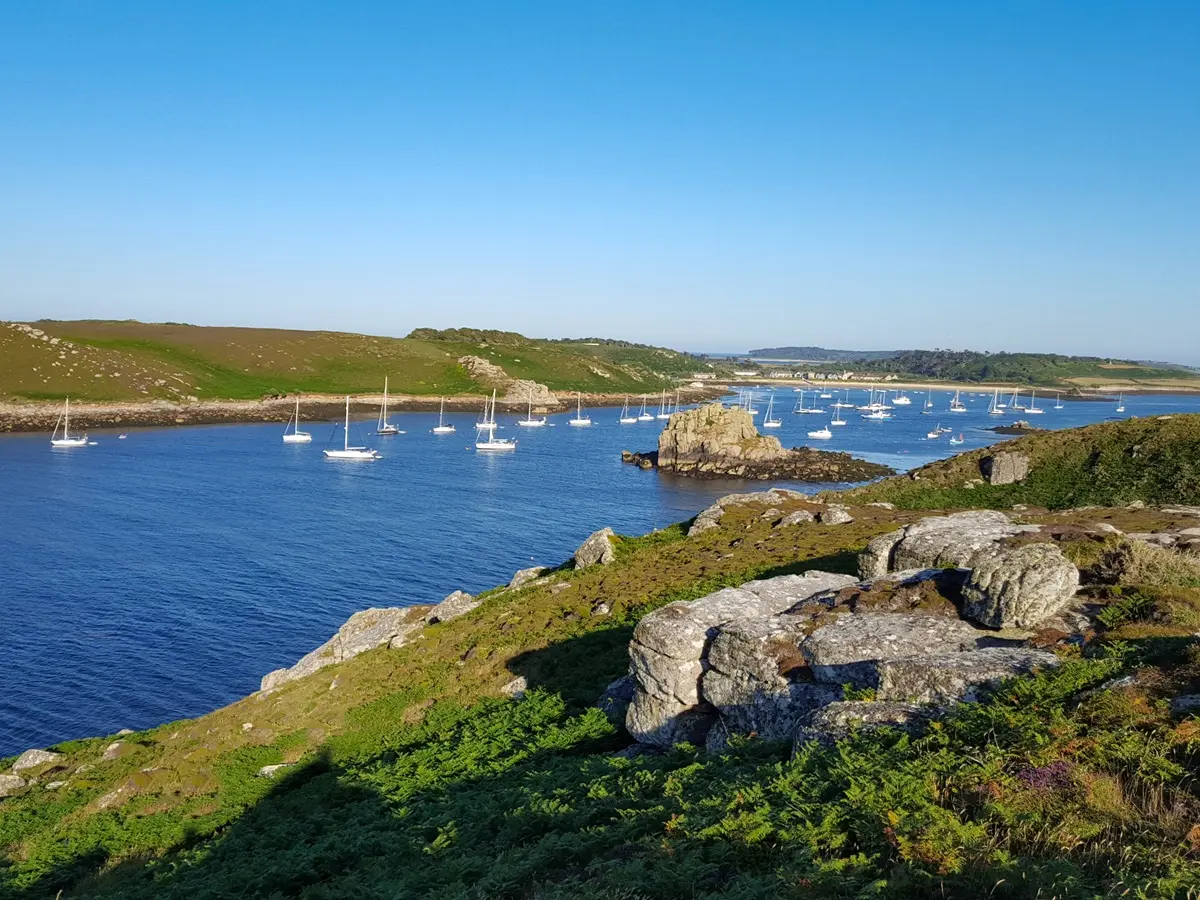
Sailing yacht anchored in the Isles of Scilly during a summer sailing holiday
Rather than being tied to a single island, travelling by boat allows people to move between anchorages and explore multiple islands during the same trip. Quiet beaches, hidden coves and smaller harbours become much easier to access.
Approaching the islands from the sea also changes the experience completely. Instead of arriving by ferry or aircraft, there is a gradual sense of transition as mainland Britain disappears and the islands emerge from the Atlantic horizon.
For many people, the journey itself becomes one of the highlights.
This is one reason why sailing holidays to the Isles of Scilly continue to attract people looking for something more adventurous and immersive than a conventional UK holiday.
People interested in experiencing the crossing themselves can learn more about our Isles of Scilly sailing holidays departing from Cornwall each summer.
Although the trip is not aimed at complete beginners, people who have reached the level of an RYA Competent Crew course often find it an good introduction to offshore sailing and longer passages.
For a closer look at the cruising grounds themselves, including some of the islands’ most famous anchorages, navigation challenges and what it is like to move between the islands by boat, see our guide to exploring the Isles of Scilly by yacht.
The Isles of Scilly in Literature and Culture
The islands have also inspired writers and artists over the years.
One well-known literary connection is Why the Whales Came, which drew inspiration from the atmosphere and legends of the islands.
Stories of shipwrecks, storms, isolation and the Atlantic Ocean have long shaped how people imagine the Isles of Scilly. Even today, the islands retain a sense of mystery and separateness that continues to inspire visitors.
Sailing to the Isles of Scilly
For people who enjoy sailing, the Isles of Scilly are widely regarded as one of the finest cruising destinations in the UK.
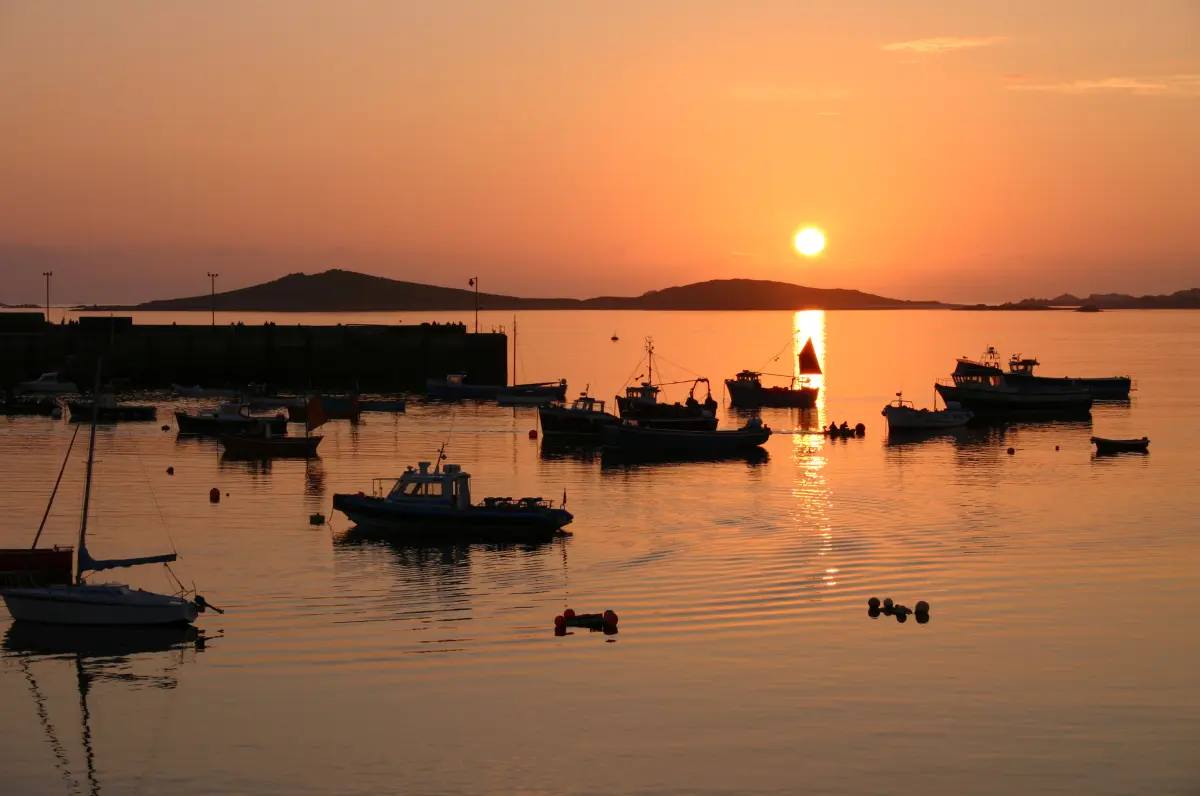
Sunset over the Isles of Scilly during a sailing holiday
The combination of offshore passage making, island hopping, sheltered anchorages and Atlantic scenery creates a style of sailing that feels very different from most mainland cruising grounds.
The crossing from Cornwall adds a genuine sense of adventure, while the islands themselves reward visitors with remarkable scenery and a pace of life that feels increasingly rare.
For more about the offshore crossing itself, including passage times and conditions, see our guide to how long it takes to sail from Falmouth to the Isles of Scilly.
For many people, one visit is enough to understand why the Isles of Scilly continue to hold such a special place in British maritime culture.