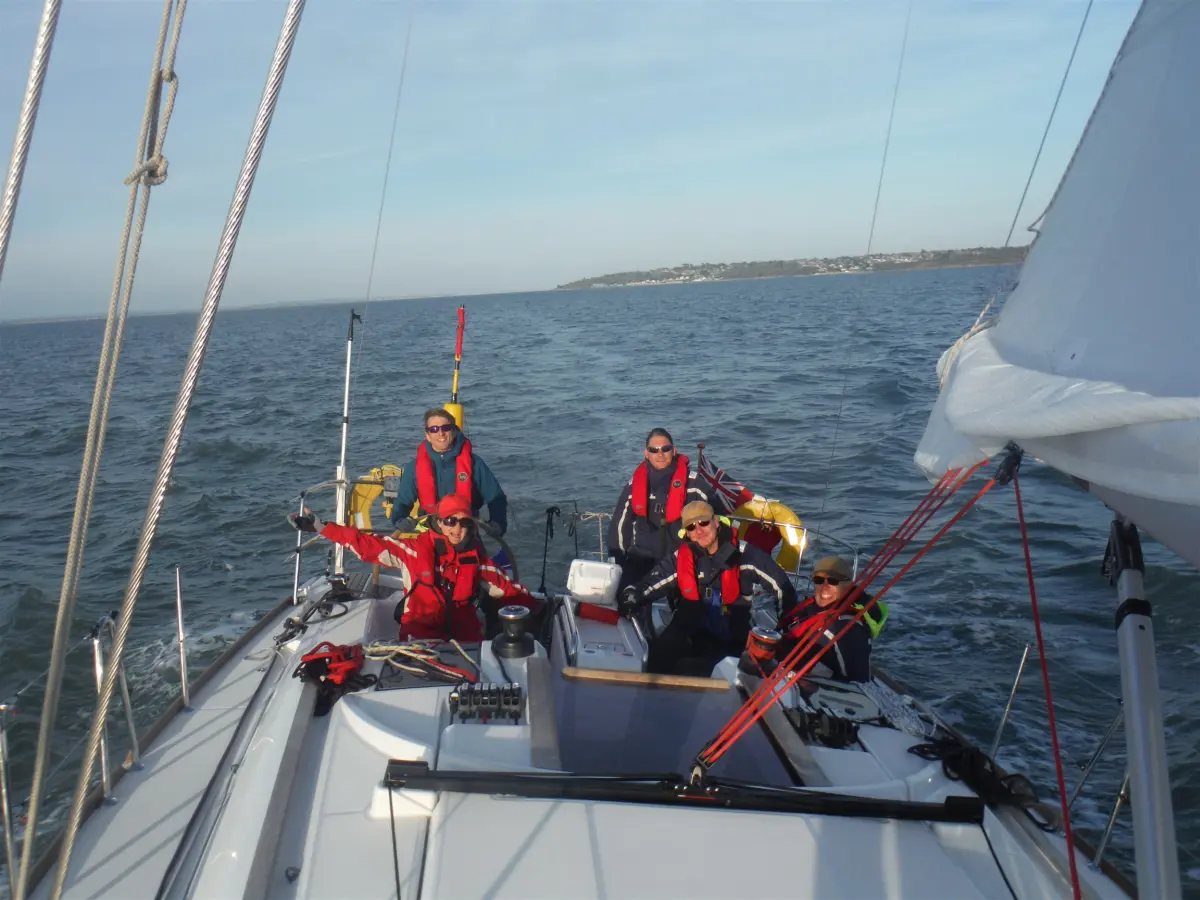
Is sailing to the Isles of Scilly difficult? In settled summer weather, the passage is well within the capabilities of a properly prepared yacht and experienced skipper — but it still deserves respect.
For many sailors, the attraction lies not just in the islands themselves, but in the challenge and satisfaction of reaching them under sail. The crossing from Cornwall involves genuine offshore sailing, careful planning and respect for Atlantic weather and UK tides.
Yet although the trip can at times be demanding, it is also enormously rewarding. Arriving in the islands after a passage from the mainland creates a real sense of achievement, particularly when the low-lying islands finally appear on the horizon after hours at sea.
For properly prepared crews on a sound yacht with an experienced skipper, sailing to the Isles of Scilly is not extreme or dangerous. It is simply proper offshore cruising that deserves respect.
Offshore Passage Making to the Isles of Scilly
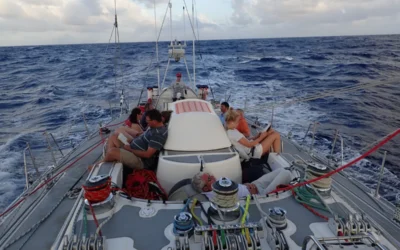
One of the reasons the passage feels more adventurous than many coastal sailing trips is that the Isles of Scilly lie around 28 miles offshore from Land’s End.
Once clear of the Cornish coast, there is often little sense of nearby land until the islands eventually emerge from the horizon. Because the islands themselves are relatively low lying, they can sometimes be surprisingly difficult to spot from a distance, particularly in haze, rain or low cloud.
The crossing from Falmouth also involves rounding The Lizard, where significant tidal races and overfalls can develop, especially in wind-against-tide conditions. Most experienced skippers therefore give the headland a generous offing and plan the passage carefully around both the forecast and the tides.
Another important consideration is commercial shipping. Significant traffic uses the Traffic Separation Scheme between Land’s End and the Isles of Scilly, meaning a proper lookout needs to be maintained throughout the passage both day and night.
One of the main sailing challenges is that the crossing can involves heading directly into the prevailing south-westerly winds, which can make the passage hard work.
Yet for many sailors, this is part of what makes the passage memorable. Reaching the islands after a proper offshore sail creates a level of satisfaction that is difficult to replicate on shorter coastal passages.
Those interested in the crossing itself can also read our guide to how long it takes to sail from Falmouth to the Isles of Scilly.
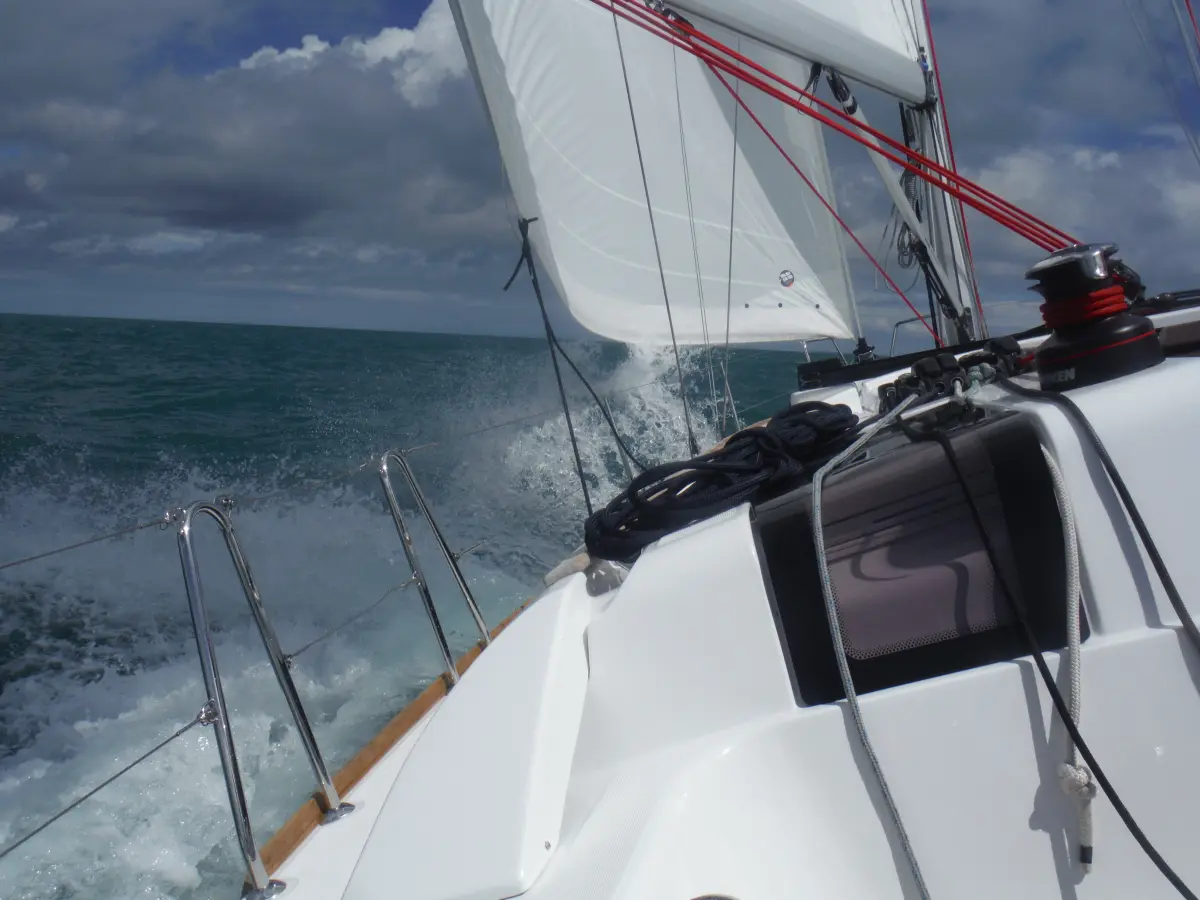
Offshore sailing passage to the Isles of Scilly from Cornwall
Tides, Tidal Streams and Atlantic Conditions
Tides play a major role in sailing around the south-west approaches and the Isles of Scilly themselves.
Strong tidal streams can develop around headlands, reefs and offshore rocks, while wind-against-tide conditions may quickly create steep and uncomfortable seas. Around The Lizard and some of the channels between the islands, tidal races and overfalls can become particularly noticeable.
Within the islands, tidal streams and local wind effects can occasionally produce currents that are not always entirely predictable. Even in relatively settled conditions, crews still need to pay attention to pilotage, anchorages and the movement of water through the islands.
Unlike some cruising grounds, the Isles of Scilly do not offer a single all-weather harbour or guaranteed port of refuge. Conditions therefore need to be considered not just for the outward passage, but also for the stay in the islands and the return crossing to the mainland.
This is one reason why experienced skippers remain flexible with plans and are prepared to alter routes or anchorages depending on the weather.
Navigation in the Isles of Scilly
Navigation in the Isles of Scilly rewards careful pilotage.
The waters between the islands contain numerous rocks, reefs, drying areas and historic wrecks. Many of these hazards are well charted, but accurate navigation remains essential.
Although modern electronic navigation has transformed offshore sailing, traditional pilotage techniques remain extremely useful in the islands. A hand-bearing compass, depth sounder, binoculars and large-scale up-to-date charts are all valuable tools when approaching anchorages or moving between islands.
Many skippers also continue to make use of transits and visual reference points when steering through narrower channels and approaches.
Historic wrecks scattered around the islands serve as reminders of how unforgiving these waters could be before accurate charts and modern navigation systems became available. The Isles of Scilly have long been associated with shipwrecks and maritime history, adding to both the atmosphere and the respect the area commands amongst sailors.
Despite these challenges, the islands are enormously rewarding to cruise. For many people, the pilotage and navigation are part of what make sailing there so enjoyable.
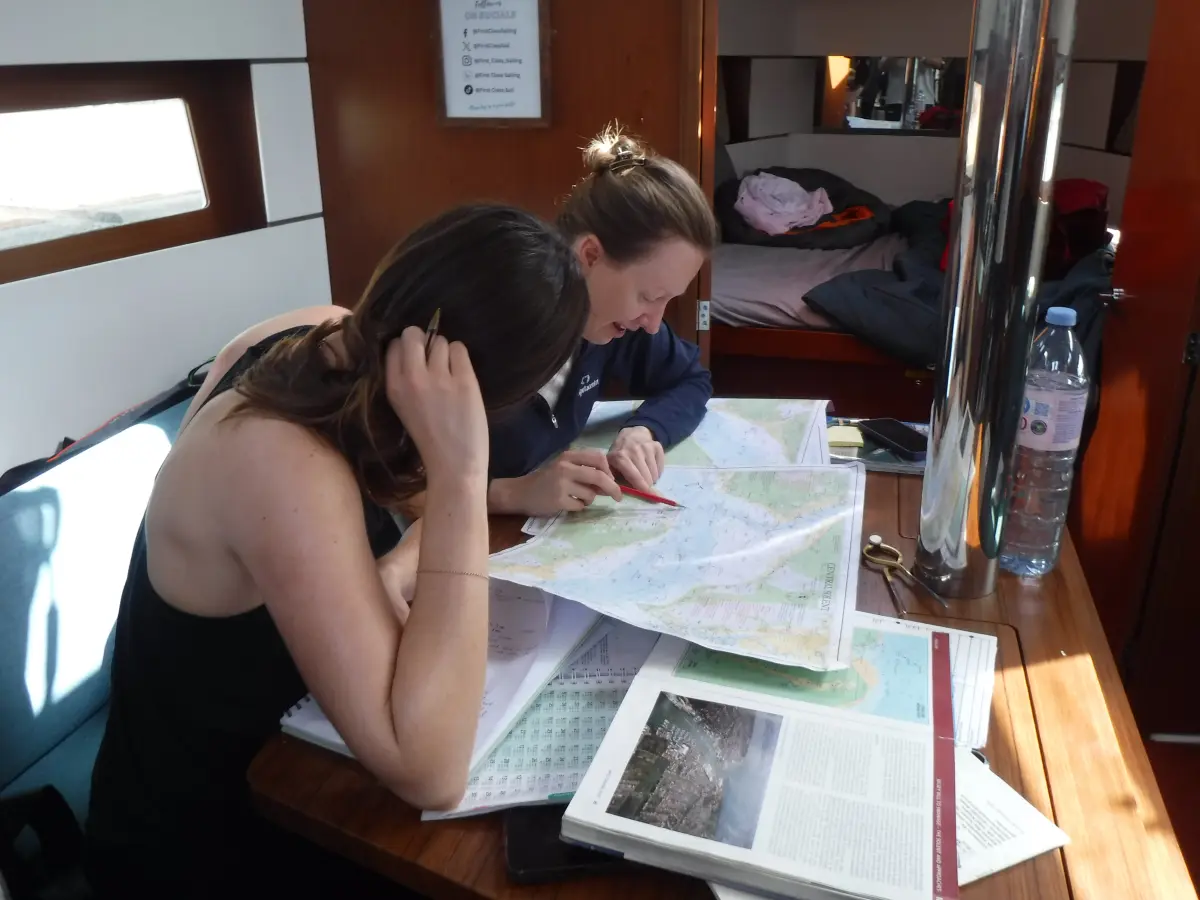
Passage Planning
Is Sailing to the Isles of Scilly Suitable for Less Experienced Sailors?
Although the passage should not be underestimated, sailing to the Isles of Scilly is certainly achievable for people with some prior sailing experience when sailing with an experienced skipper.
The trip is not aimed at complete beginners, but sailors who have reached the level of an RYA Competent Crew course often find it an ideal introduction to offshore sailing and longer passages.
Part of the appeal lies in experiencing genuine offshore sailing while still remaining within the UK and supported by experienced crew and skippers.
The passage also provides exposure to:
- offshore watchkeeping
- tidal planning
- pilotage
- night sailing
- navigation
- passage planning
all within a real cruising environment rather than a training exercise.
What Happens if the Weather Is Unsuitable?
The Isles of Scilly are normally visited during the more settled summer months, but offshore sailing always depends on the weather.
Sometimes the conditions are simply not suitable for crossing safely or comfortably to the islands. Experienced skippers therefore consider not only the outward passage, but also the likely conditions during the stay in the islands and the return trip to the mainland.
If conditions are not favourable for visiting the islands, there is still some exceptional cruising available along the Cornish coast. Areas such as the Helford River, Fowey and the coastline around the Lizard offer some of the finest cruising grounds in Britain.
And if the weather is unsuitable even for leaving the Fal Estuary itself, there are still numerous sheltered creeks, anchorages and rivers to explore within the Fal.
Flexibility has always been part of sailing, and alternative plans often still lead to memorable trips.
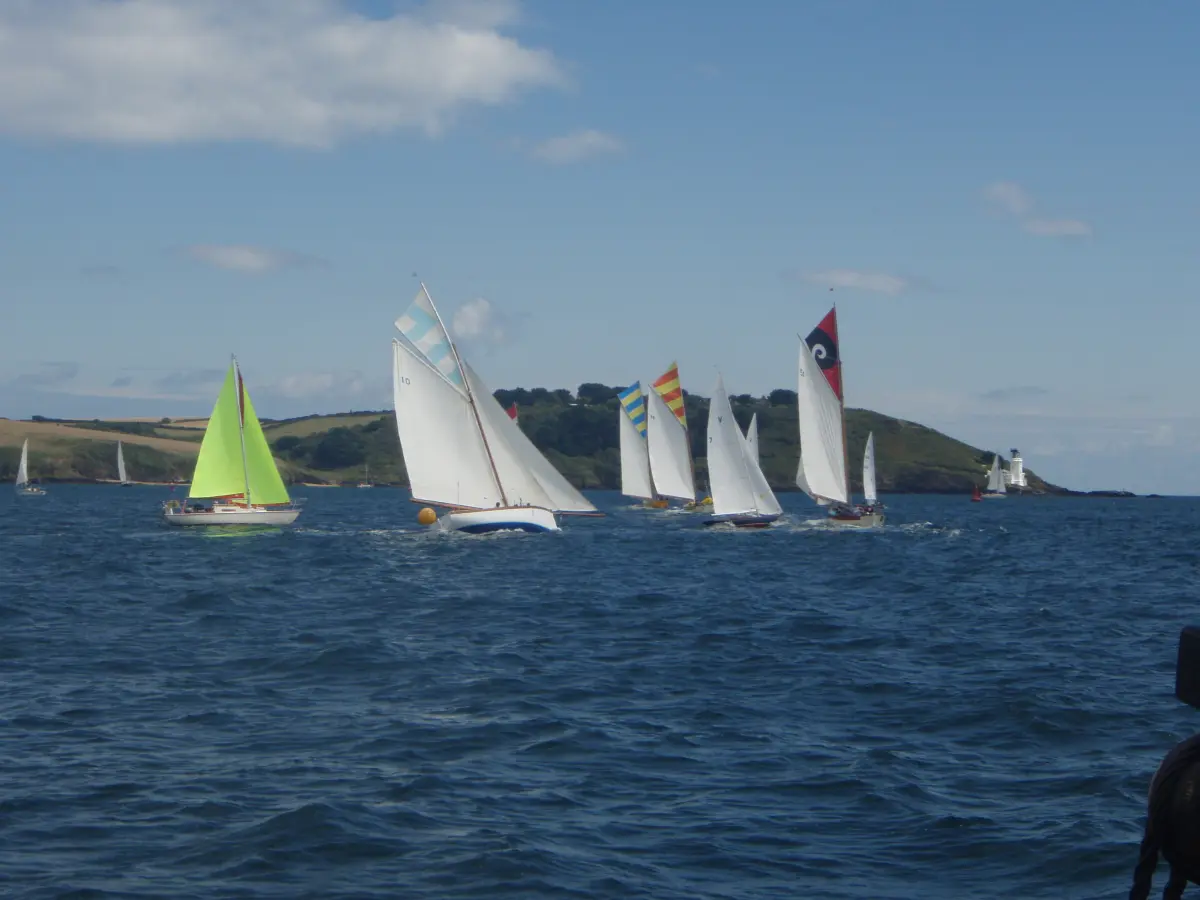
Cruising in the Fal Estuary in Cornwall
Why Sailing to the Isles of Scilly Is Worth the Effort
The very things that make sailing to the Isles of Scilly challenging are also what make it rewarding.
There is a genuine sense of adventure in leaving mainland Britain behind and crossing open water towards a remote Atlantic archipelago. Arriving amongst the islands after an offshore passage feels fundamentally different from arriving by ferry or aircraft.
Once there, sailors are rewarded with beautiful anchorages, crystal clear water, abundant wildlife and the freedom to move between islands at their own pace.
For more about the islands themselves, their history, wildlife and climate, see our guide to what makes the Isles of Scilly so special.
And to discover more about the cruising grounds, anchorages and life between the islands, read our article on exploring the Isles of Scilly by yacht.
Sail to the Isles of Scilly with First Class Sailing
Our Isles of Scilly sailing holidays depart from Falmouth during the summer months and combine offshore sailing with time exploring one of Britain’s most unique cruising destinations.
Sailing to the islands requires planning, flexibility and respect for the conditions, but for many people that challenge is precisely what makes the trip so memorable.
If you would like to experience the crossing for yourself, view our Isles of Scilly sailing holidays departing this summer.