Atlantic Circuit 2026–27 | 8–11 November 2026
Sailing in heavy weather is one of the most memorable experiences an offshore sailor can have. It demands teamwork, preparation, good seamanship and the ability to adapt when the weather changes.
For the crew aboard Challenger 3, a Challenger 72 sailing from Portsmouth to the Canary Islands, the latest stage of their Atlantic adventure has provided all of these challenges — and more.
After a stop in Cascais, Portugal, the crew set sail towards Gran Canaria with two powerful low-pressure systems affecting their planned route. With strong winds, large waves and challenging conditions aboard, this was always going to be an exciting passage.
But offshore sailing also brings extraordinary rewards. As the weather improved, the crew were treated to sunshine, fast sailing and the satisfaction of making excellent progress towards Las Palmas.
Here’s John’s latest account of life aboard, with help from the rest of the crew.
[Previously on our Atlantic Circuit: The crew crossed the Bay of Biscay, practised astro navigation and arrived in Cascais, Portugal, before preparing for the next stage of their adventure. Catch up with Blog 3: Offshore Sailing Experience — Biscay, Cascais and Beyond.[
Crew Blog — 8–11 November: Between Two Atlantic Storms
Boat prepped and food stored, sails made ready and course decided, for now anyway, best to be flexible at sea. We slip our moorings at about 2pm and head off into the Ocean blue, well ,grey actually.
There are two low pressure systems affecting our passage, what would be ideal is to head South from Cascais to Las Palmas but a big system South of us and off to the West is preventing us from doing that, 60 + kt winds according to Windy so clearly to be avoided, the other system is heading for Lisbon so our plan is to wriggle between the two and then once the storm below is no longer an issue hang a left and blast down to Las Palmas.
We are soon under sail with two reefs in the mainsail and the storm jib flying. Its not long before the inside of the boat is taking on the qualities of a spacecraft simulation module, well at least its ability to mimic zero gravity as we climb humungous waves and then drop off the back of them .
The inside of the boat has turned into a body weight gym . We are on a port tack and well pressed even with 2 reefs and the storm jib. On one of my goes at helming the wind hit 47 knts . Moving from one side to the other means summoning inner strength as we claw our way from side to side of the boat. Gathering food ingredients for meals becomes especially challenging, even with our prepared meals.
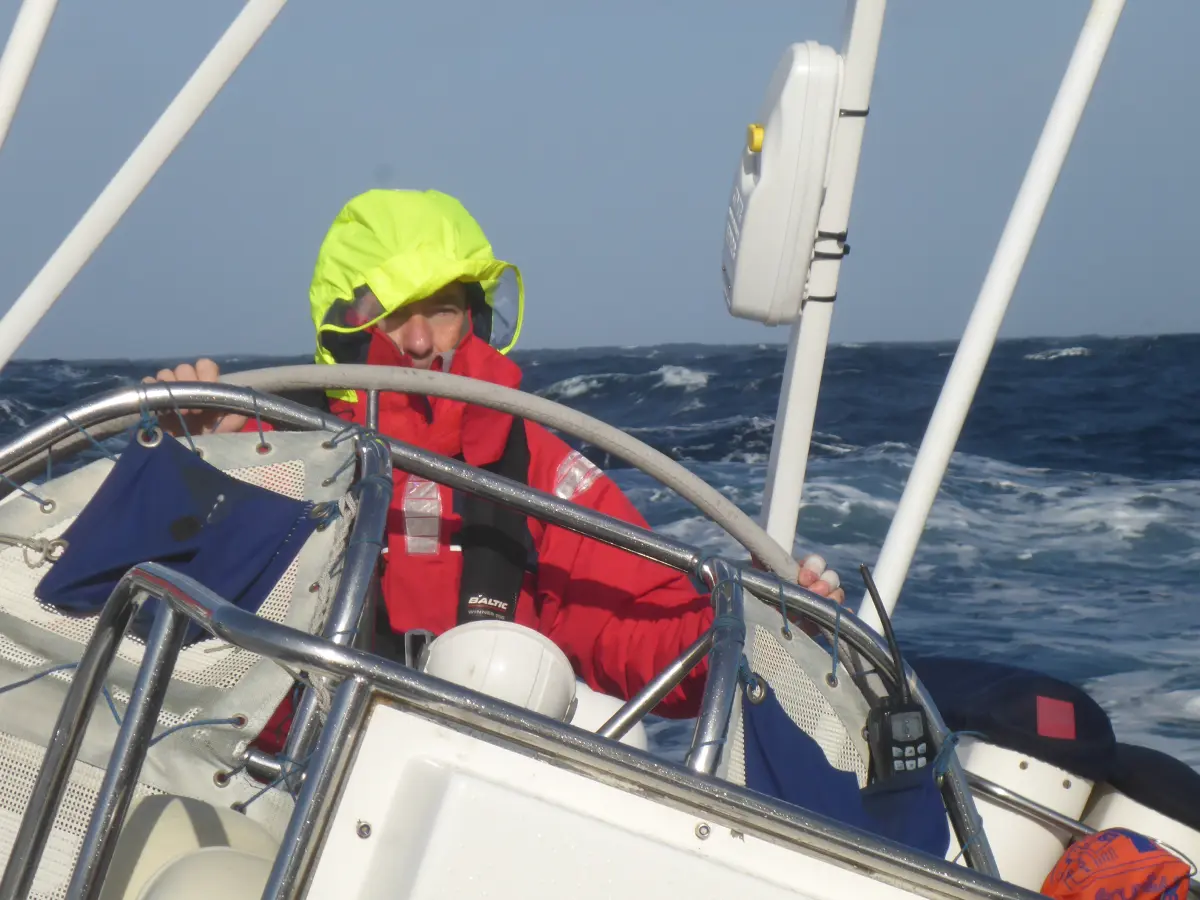
Heavy Weather sailing on a trusty Challenger 72
Getting into and out of bunks and staying in them is also a massive challenge with those on the high side jealous of those on the low side, that soon changes though when we tack albeit that a new technique needs to be figured out to both get in and out. My high side belly first and roll is replaced with a rather more elegant low side Fosbury flop type manoeuvre.
At night looking behind us once the first low pressure system has passed we are treated to a spectacular show as flashes of intense lightening and the sound of distant thunder pierce the night sky. I am reminded of the Black Tower in Lord of the rings and am sure I can see Orcs and Cave Trolls chasing our boat as we surge forward.
Eventually we clear the second low pressure and at 0500 on Wednesday morning raise yankee 2 turn on a Starboard tack , let out the mainsail, leave those Orcs behind and start our blast down to Las Palmas on our new course of 180 degrees.
575 mIles to go. We hope to be there by Saturday morning and at 11 kts over ground its looking good. I allow myself a little smile knowing that my bunk is on the port side.
When Starboard Watch get back on deck we find the 2 reefs in the mainsail shaken out and Yankee 2 hoisted with a stay sail, we are flying and the sun is out.
Going on watch at 0700 we drop the yankee 2 and hoist the Yankee 1 and in the diminishing winds we manage to maintain around 9 knts so its looking good for us to be making Las Palmas on Saturday morning. The boat has settled down and we no longer are hard pressed, the sea state has calmed so Skipper Adam , or task master , as we should call him soon sets us on sail flaking and bagging and sail locker tidying and packing away sails that the Arc crew will need. With muscles burning and sweat pouring from our brows the end of our watch can’t come soon enough but then with teamwork we are finished , the sun comes out and we take a breather resting in glorious sunshine rather than pouring rain as the 300 mile stone clicks over and we celebrate with a jelly baby or two!
The Friday before this epic voyage the Wordle word was yahoo.
I agree YAHOO indeed !!!!!
John – with the help of the rest of the crew
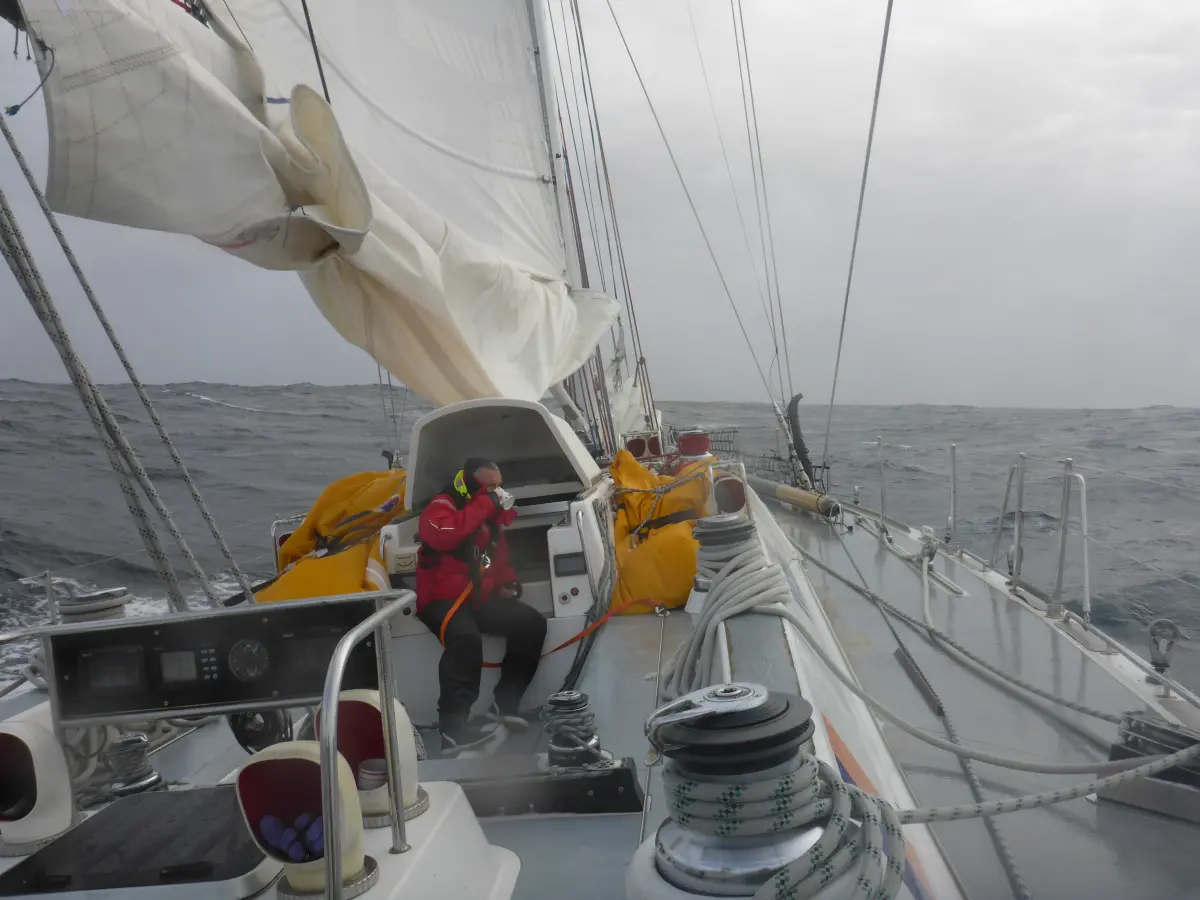
Heavy weather cup of tea
What Is It Like Sailing in Heavy Weather?
John’s account gives a fascinating insight into the realities of sailing in heavy weather on an offshore passage.
Before leaving Cascais, the skipper and crew carefully studied the forecasts and planned a route intended to avoid the worst of two Atlantic low-pressure systems. Rather than simply heading directly south, they initially sailed west to find a more favourable route towards the Canary Islands.
Even with careful passage planning, conditions were demanding. Winds reached 47 knots during one of John’s spells at the helm, while the yacht was sailing with two reefs in the mainsail and a storm jib.
Below decks, everyday tasks such as preparing meals, moving around the yacht and getting into a bunk became considerable challenges.
But this is also where offshore sailing experience becomes so valuable. The crew were able to see how sail selection, reefing, weather routing and teamwork all contribute to managing a yacht in challenging conditions.
From Heavy Weather to Fast Sailing Towards Gran Canaria
Once the yacht had cleared the worst of the weather, conditions began to improve.
With more sail set and the wind becoming more favourable, Challenger 3 was making impressive progress south towards Las Palmas.
The contrast between the challenging conditions earlier in the passage and the later sunshine and fast sailing is one of the things that makes an offshore adventure so memorable.
And, as John describes, there was still plenty of work to be done. Preparing and stowing sails for the next crew was another important part of the voyage.
For the crew, this passage has provided a remarkable combination of offshore experience, practical seamanship and shared adventure.
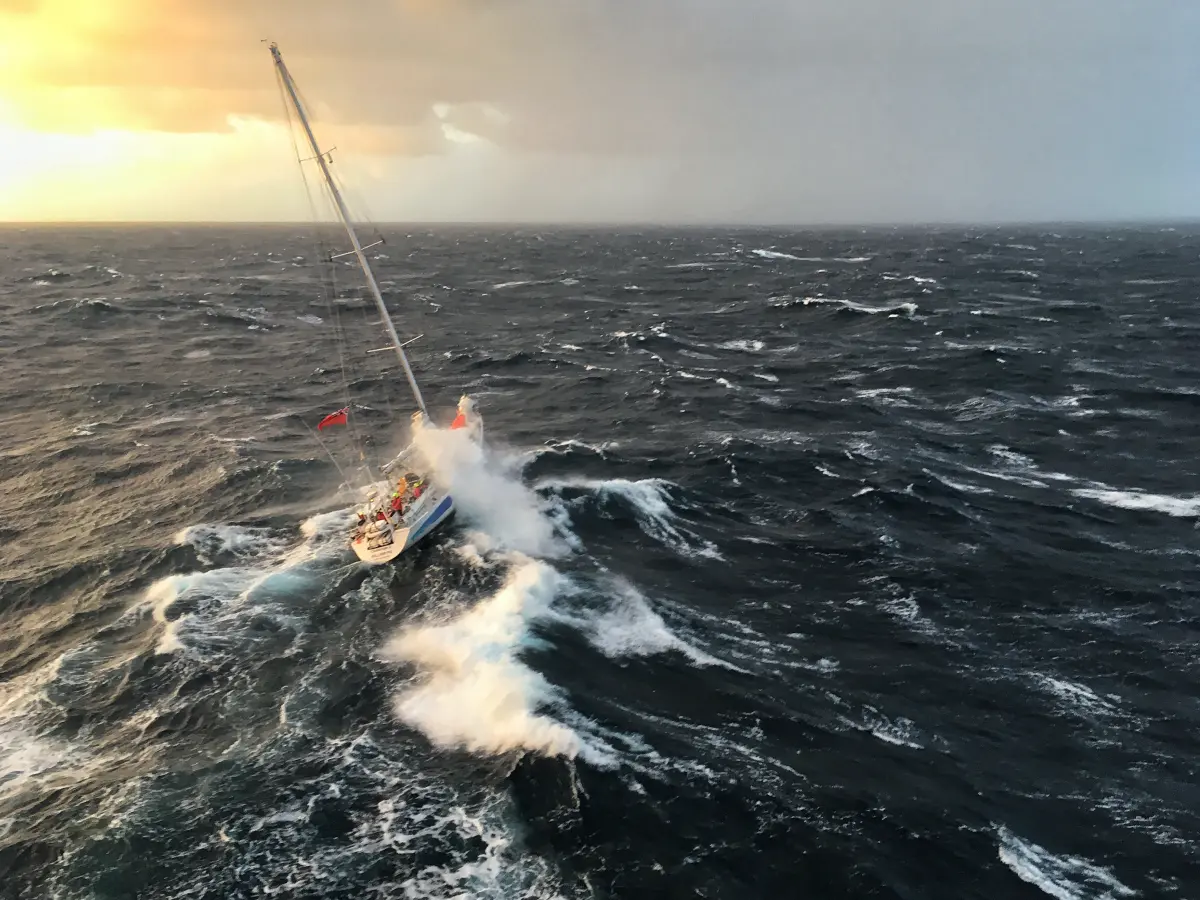
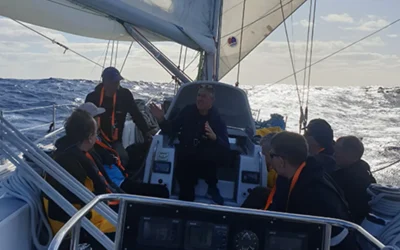
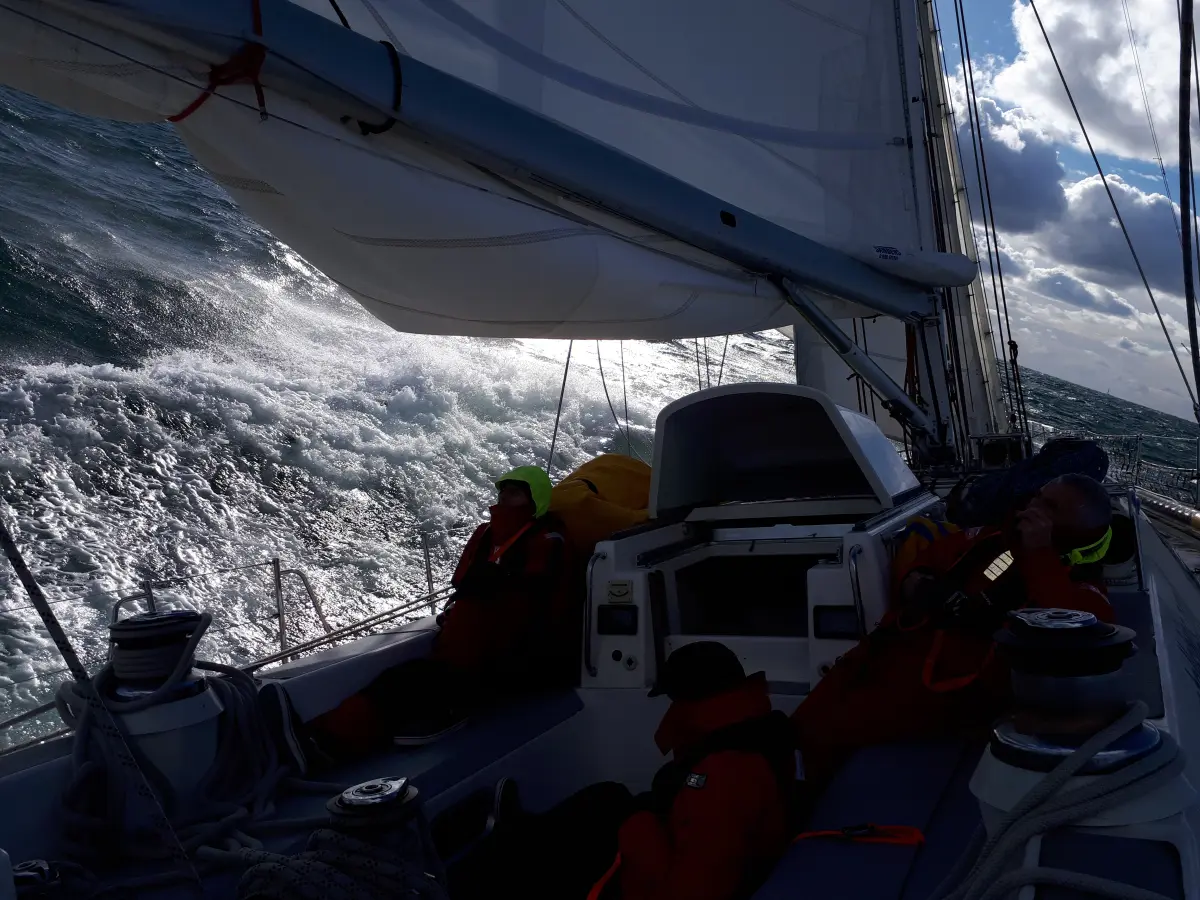
A Challenger 72 sailing in heavy weather in the Bay of Biscay in 2019 taken by the Spanish Coastguard
Interested in Learning More About Heavy Weather Sailing?
Sailing in challenging conditions can be an exhilarating experience, but preparation, knowledge and good seamanship are essential.
If John’s account has inspired you to develop your own offshore sailing skills, First Class Sailing offers a Heavy Weather Sailing Weekend, where you’ll gain practical experience of sail handling, reefing, heavy weather tactics and managing a yacht in stronger winds.
Our RYA Sea Survival course is another valuable option for anyone planning longer offshore passages. It covers essential safety procedures, emergency equipment and survival techniques, including practical experience with a liferaft.
Whether you’re preparing for your first offshore passage or looking to build confidence in more demanding conditions, these courses can help you become a more capable and better-prepared sailor.
Follow the Atlantic Circuit — Or Join the Next Adventure
This Portsmouth to Canaries passage is the opening leg of First Class Sailing’s 2026–27 Atlantic Circuit.
With the Challenger 72 approaching Gran Canaria, attention will soon turn to the next stage of the adventure: crossing the Atlantic to the Caribbean.
ARC Rally 2026 — Las Palmas to St Lucia
The Atlantic Rally for Cruisers is the next major voyage, taking the Challenger 72 approximately 2,700 nautical miles across the Atlantic from Gran Canaria to St Lucia.
This is an opportunity to experience ocean sailing, trade-wind conditions and the camaraderie of a major international rally.
Caribbean Sailing Holidays — December 2026 and January 2027
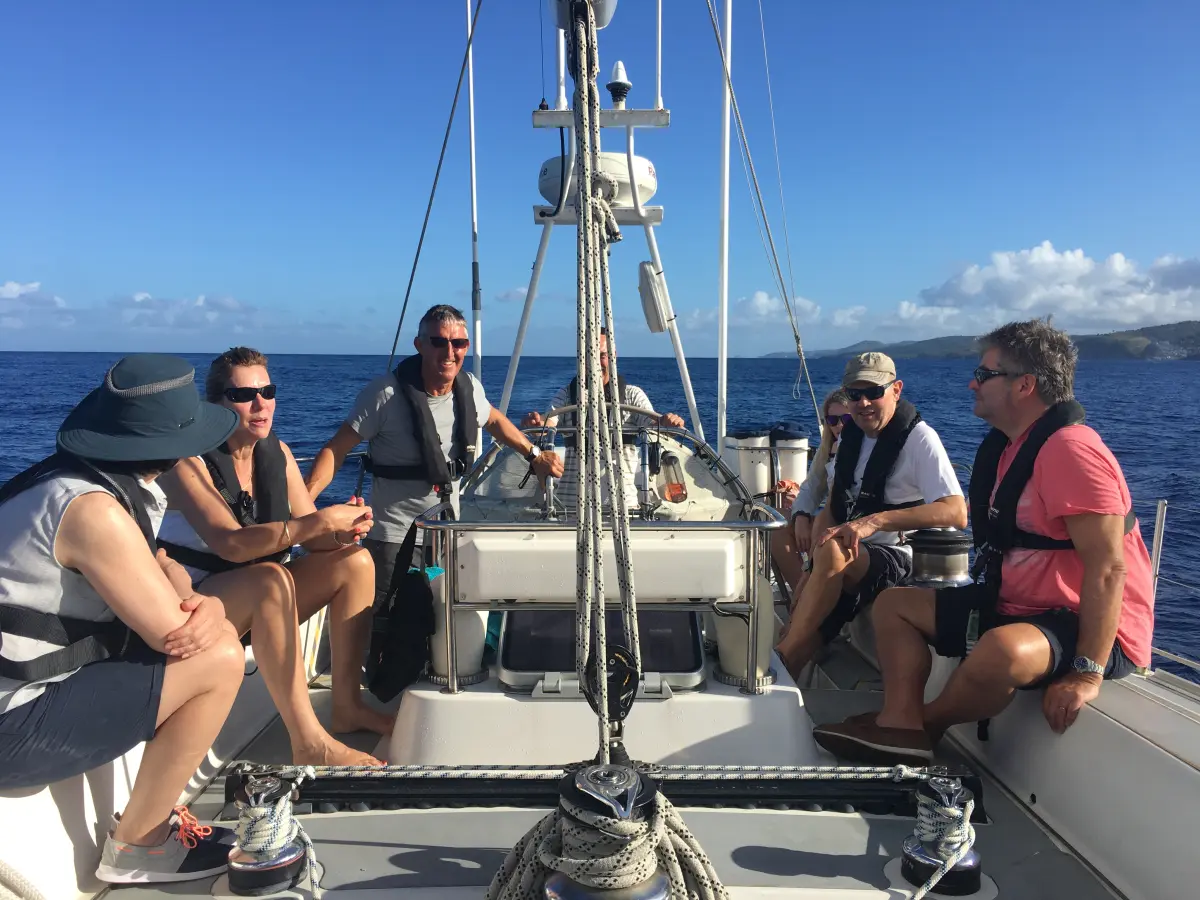
Sailing in the Caribbean
After crossing the Atlantic, the Challenger 72 will undertake two Caribbean sailing holidays:
- 16–22 December 2026: St Lucia to Grenada
- 3–12 January 2027: Grenada to Antigua
These adventures combine hands-on sailing with opportunities to explore beautiful Caribbean islands and anchorages.
Antigua to Portsmouth — The Return Atlantic Crossing
The final leg of the circuit is the Antigua to Portsmouth Atlantic sailing passage in January and February 2027.
Covering approximately 3,500 nautical miles, this substantial offshore passage offers the opportunity to build sea miles and experience an Atlantic crossing aboard a Challenger 72.
Could you join the next adventure?
Explore our upcoming voyages at First Class Sailing and enquire about remaining places.
We’ll continue following the crew as Challenger 3 makes her final approach towards Las Palmas. Watch out for the next instalment of our Atlantic Circuit adventure.