Winter sailing in the Caribbean is often described as ideal — but that word can hide a lot of important detail. Conditions are excellent, yes, but they are also hot, windy, and purposeful, shaped by global weather systems that have defined ocean sailing for centuries.
Understanding what winter sailing in the Caribbean really involves helps set expectations properly and explains why this region works so well for hands-on sailing holidays.
When “winter sailing” actually takes place
When sailors talk about winter sailing in the Caribbean, they are usually referring to the period from December through to April.
For readers in the northern hemisphere, this conveniently aligns with winter at home. For those in the southern hemisphere, it’s worth being clear: Caribbean “winter sailing” refers to the calendar months, not local winter conditions.
Between December, January, February, March and early April, the Caribbean typically experiences:
-
settled weather patterns
-
reliable trade winds
-
lower rainfall than the summer months
-
consistently high temperatures
This is widely regarded as the prime sailing season.
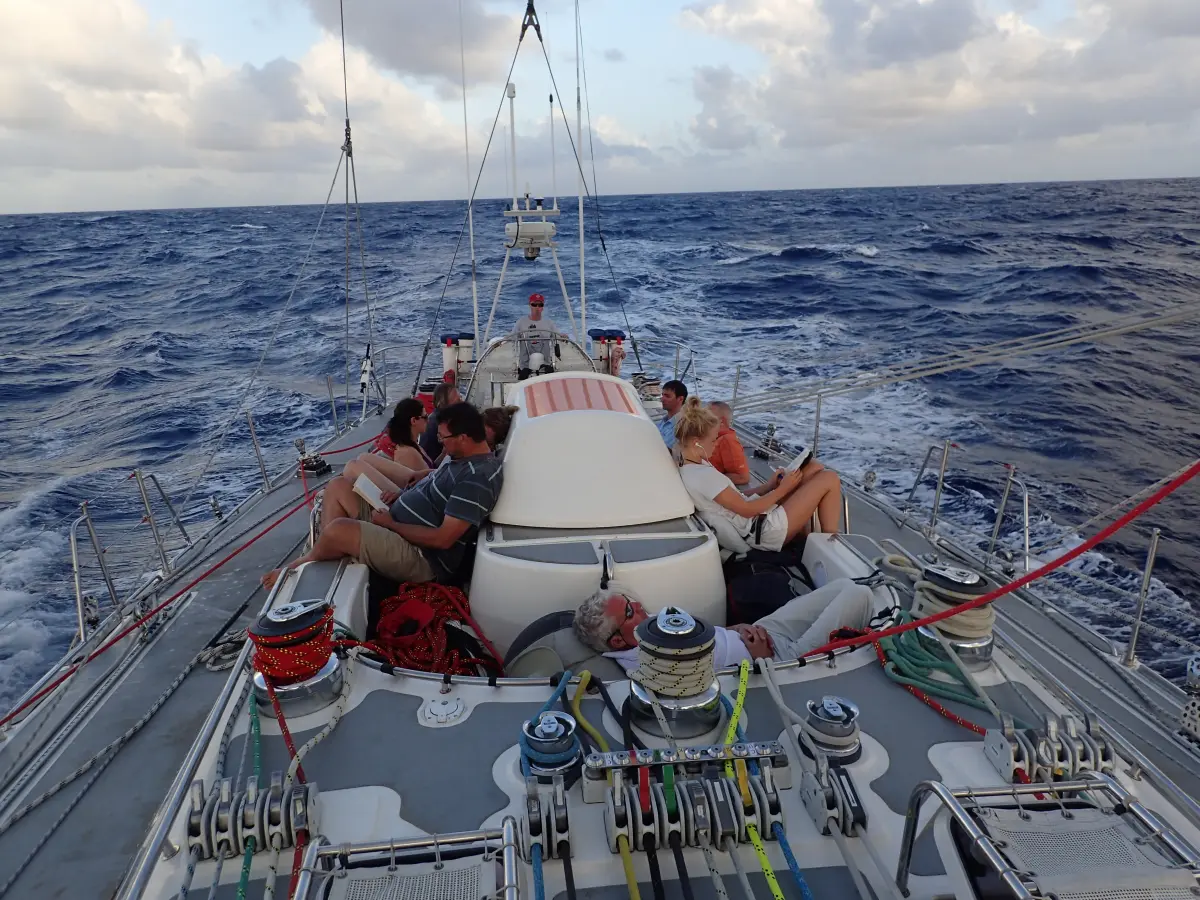
Caribbean sailing conditions between December and April
Hot, even in winter — and why the breeze matters
Winter in the Caribbean is not mild — it is hot. Daytime temperatures during the sailing season regularly sit in the mid to high 20s°C, and can feel hotter still under clear skies and strong sun.
The trade winds do not make the Caribbean cool. Not only do they make it sailable but they make it bearable!
Without regular airflow, the combination of heat, humidity, and strong sunshine would be exhausting. Under sail, the breeze provides constant ventilation across the deck and through the boat, making life on board manageable rather than oppressive.
Even so, preparation matters. Sun cream, loose-fitting breathable clothing, hats, sunglasses, and good hydration quickly become part of everyday routine on a Caribbean sailing holiday.
Trade winds: direction, strength, and what to expect
The defining feature of winter sailing in the Caribbean is the trade wind system.
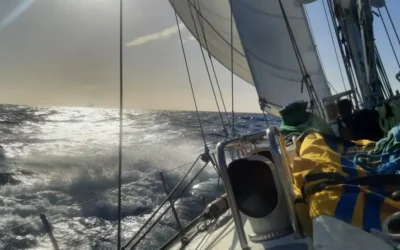
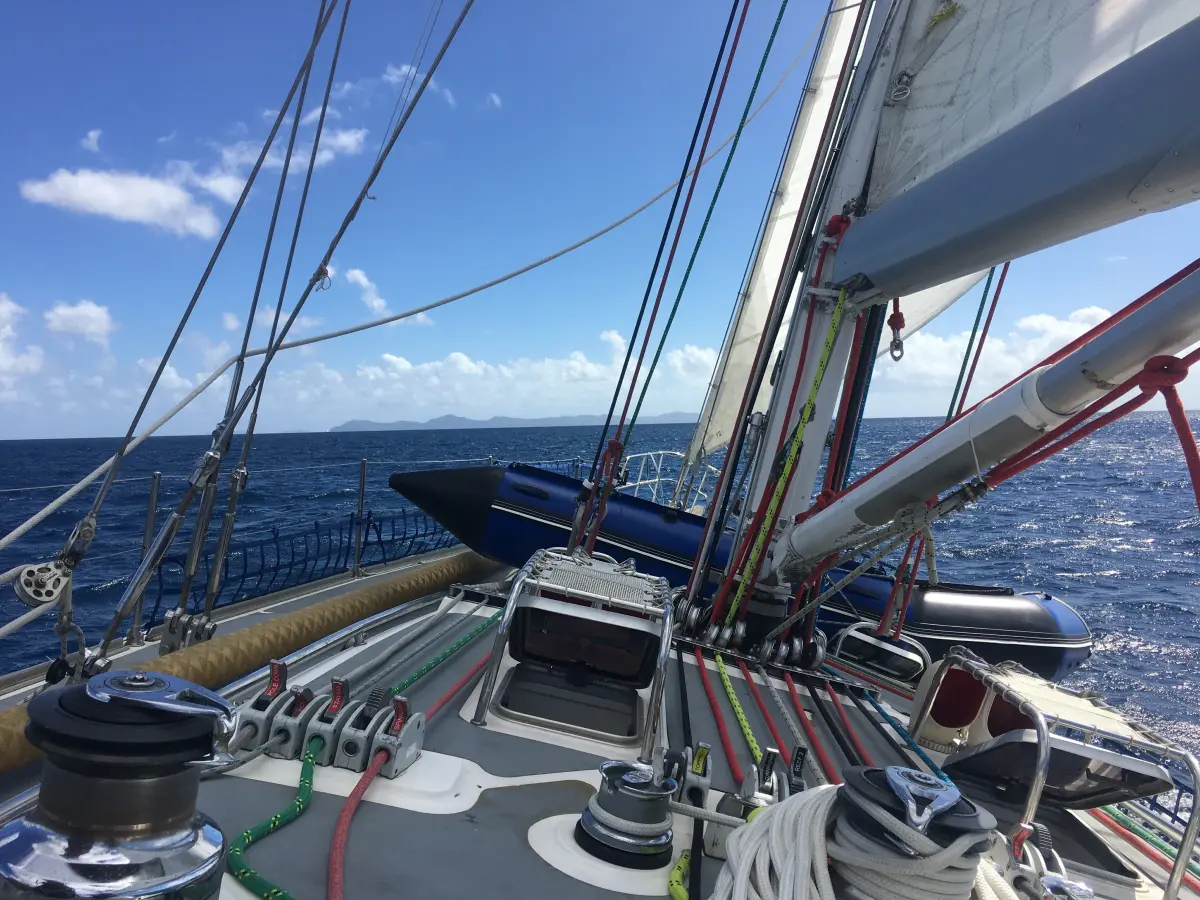
During the sailing season, winds blow predominantly from the east and northeast, providing consistent conditions across much of the region. Typical wind strengths are often in the region of 15–25 knots, with periods of stronger breeze depending on location and passing weather systems.
This is not light-air sailing. Most days involve purposeful wind, sails drawing properly, and boats moving well. Calm, drifting days are uncommon, and reefing is a normal part of sail management rather than an occasional event.
For sailors, this consistency is part of the appeal: reliable wind that rewards good sail trim and teamwork without becoming unmanageable.
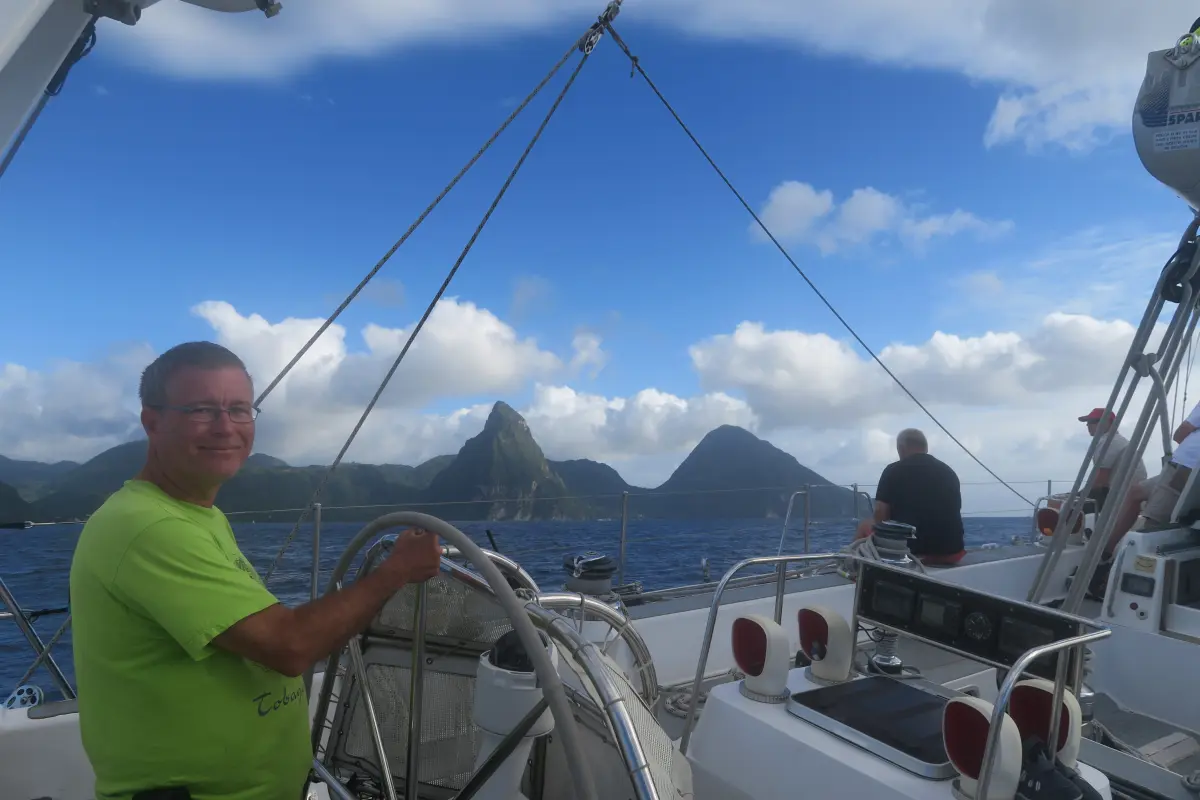
Trade wind sailing in the Caribbean
Why trade winds exist — and why they’re called that
Trade winds have powered ocean sailing for centuries, long before modern forecasting.
A combination of warm air rising near the equator, cooling and sinking at higher latitudes, along with the Coriolis effect caused by the Earth’s rotation deflecting airflow, creates these consistent easterly winds that sailors have relied on for generations. For a more in-depth explanation of how trade winds work, see how trade winds form.
Their predictability is the reason historic trading routes crossed the Atlantic on remarkably reliable schedules — and why modern sailors still plan voyages around the same wind systems today.
Trade winds and the doldrums
The trade winds also help explain why sailing conditions vary so dramatically across the globe.
Near the equator lies the Intertropical Convergence Zone (ITCZ), often referred to by sailors as the doldrums. This is where the northern and southern trade winds meet, causing air to rise vertically rather than flow horizontally.
In the doldrums, winds can be light, variable, or completely absent. The Caribbean lies comfortably north of this zone, which is why it enjoys steady winds while equatorial regions do not.
This geographic positioning is a key reason why the Caribbean works so well for winter sailing.
What winter conditions mean for sailing holidays
In practical terms, winter conditions in the Caribbean allow for a wide range of sailing experiences.
Short daytime hops between islands sit alongside longer passages, some of which may involve sailing overnight to reach a particular destination. In trade wind conditions, night sailing is often controlled and purposeful rather than calm — steady breeze, reefs in place, and a watch system that keeps things safe and comfortable.
For many sailors, steering under stars with a warm breeze and clear skies becomes one of the highlights of the trip.
Daily life on board, including night sailing and time ashore, is explored in more detail in What It’s Really Like on a Caribbean Sailing Holiday.
Experience Caribbean trade-wind sailing this winter
We have two hands-on Caribbean sailing holidays aboard our Challenger 72 this winter:
16–22 December 2026 — 7 days sailing from St Lucia to Grenada — £1,749
3–12 January 2027 — 10 days exploring Grenada to Antigua — £2,499
You can join individually, as a couple or with a friend. You’ll sail as part of the crew alongside a professional skipper and mate, with opportunities to helm, handle sails, navigate and experience Caribbean trade-wind sailing for yourself.
See Caribbean sailing holiday dates, prices and availability.
A word on hurricane season — and the old rhyme
Caribbean sailing seasons are also shaped by the Atlantic hurricane cycle. While modern forecasting has transformed how sailors manage risk, traditional sayings still capture the broad timing of the season:
“June – too soon
July – stand by
August – you must
September – remember
October – all over”
While not scientific, the rhyme reflects the reality that the official hurricane season runs from June to November, with the highest activity typically between August and October.
By December, the season has passed, contributing to the calmer and more predictable conditions that define winter sailing.
How winter weather shapes the overall experience
Because conditions between December and April are generally settled, winter sailing in the Caribbean encourages flexibility rather than constraint.
Routes can be adjusted, anchorages chosen day by day, and time under sail balanced easily with time ashore. This freedom is one of the reasons many sailors prefer a sailing holiday to a fixed-base winter break.
For a broader comparison between sailing holidays and resort-based travel, Why a Caribbean Sailing Holiday Beats a Beach Resort in Winter explores how movement and weather shape the experience.
Is winter Caribbean sailing right for you?
While winter conditions are favourable, sailing remains active and hands-on. The warmth, wind, shared responsibility, and changing plans are all part of the experience.
Those who enjoy involvement, adaptability, and real sailing tend to thrive. A more personal guide to suitability can be found in Is a Caribbean Sailing Holiday Right for You?.
Bringing it all together
From December through April, the Caribbean offers a powerful combination: strong sun, steady trade winds, and sailing conditions shaped by global weather systems that have guided mariners for centuries.
For sailors seeking a winter escape built around real sailing rather than passive relaxation, these conditions form the foundation of a rewarding and memorable holiday.
If you’re looking to experience these trade wind conditions for yourself, these Caribbean sailing holidays are designed to give you hands-on experience as part of the crew.
One more thing that may be of interest…
Why are they called the Windward and Leeward Islands?
The Caribbean islands are often divided into the Windward Islands and the Leeward Islands, and the names come directly from the direction of the trade winds.
In the Caribbean, the trade winds blow steadily from east to west. Islands that face into these winds are known as the Windward Islands, while those that lie more sheltered downwind are called the Leeward Islands.
For people sailing in the Caribbean, this distinction matters. The Windward Islands often experience slightly stronger, more consistent winds and more open sea conditions, while the Leeward Islands can offer more sheltered waters and easier passages between islands.
Understanding this helps explain why sailing routes, conditions, and even the feel of a trip can vary across the region — even though the distances between islands are relatively small.