Each November the Atlantic Rally for Cruisers brings together sailors from all over the world for the famous trade-wind crossing from the Canary Islands to the Caribbean. The 2025 edition — marking the 40th anniversary of the rally — is now well underway. With the first finishers already in, and much of the fleet still ocean-bound, it’s a perfect moment to look at what’s happening mid-crossing: the leaders, standout boats, human stories, and how long remains for those under sail.
What is the ARC?
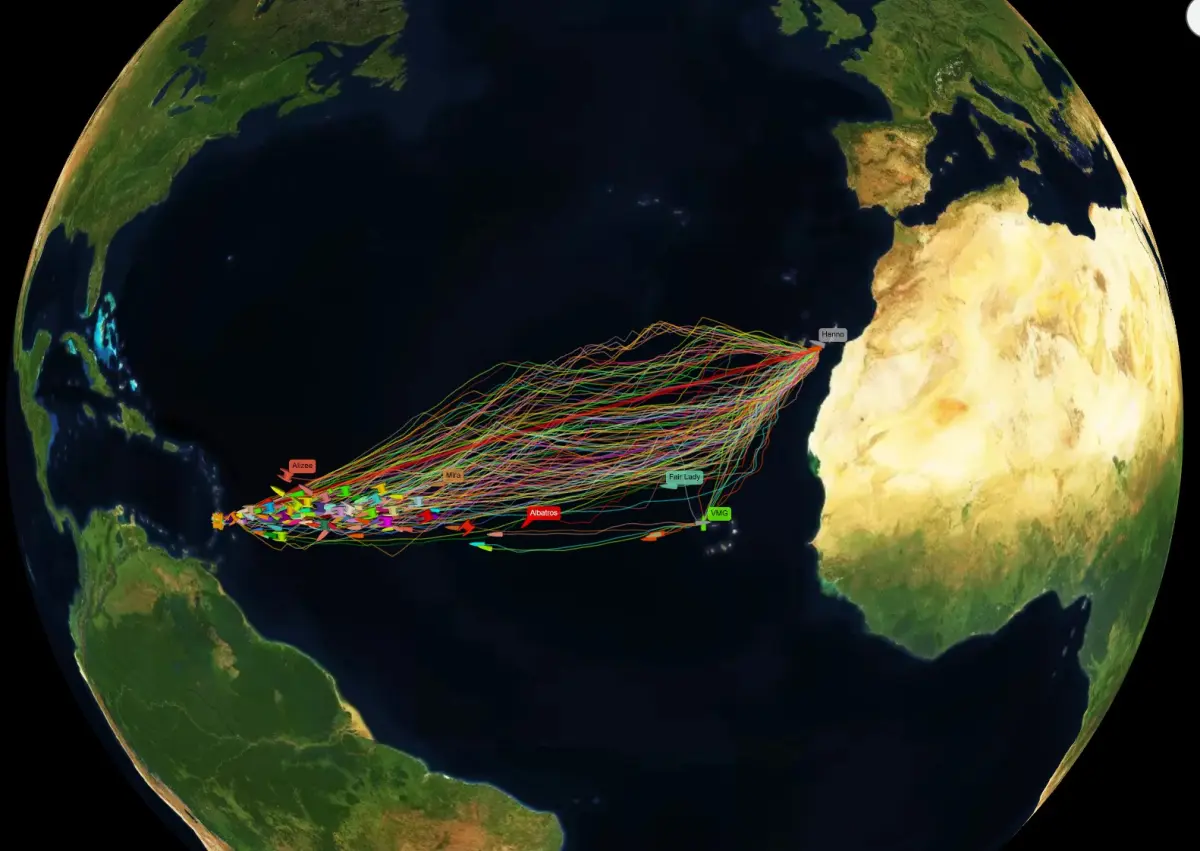
The ARC is a transatlantic rally rather than a pure race — though some boats chase line honours with competitive intent. The route covers roughly 2,700 nautical miles, running from Las Palmas, Gran Canaria to Rodney Bay, Saint Lucia in the Caribbean.
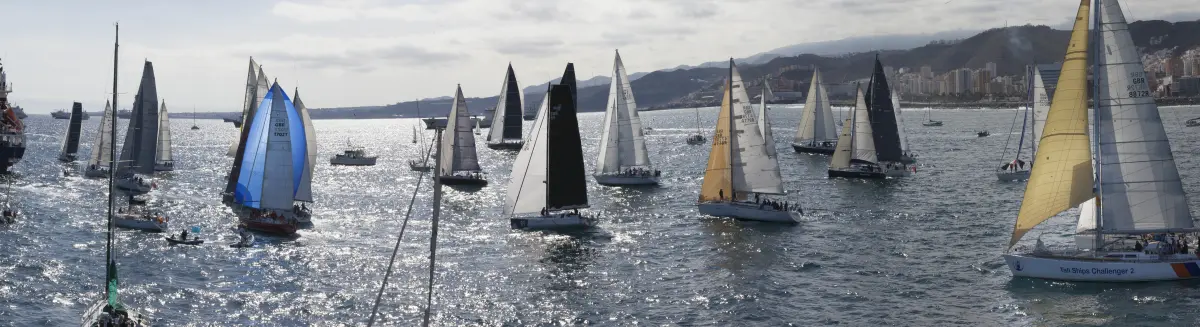
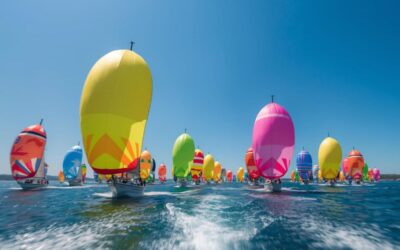
Fleet departing Las Palmas sails up at the start line
This year’s fleet is diverse: around 145 yachts and more than 820 crew, ranging from modest 34-foot cruisers to performance multihulls over 70 feet. The rally welcomes families, first-time ocean crossers, seasoned blue-water skippers, and adventure-hungry crews chasing the dream of landfall in the tropics.
Early Arrivals & Who’s Leading
The 2025 rally began on 23 November, and while the full crossing typically takes 18–21 days for a standard cruising yacht, the fastest boats have already reached the Caribbean.
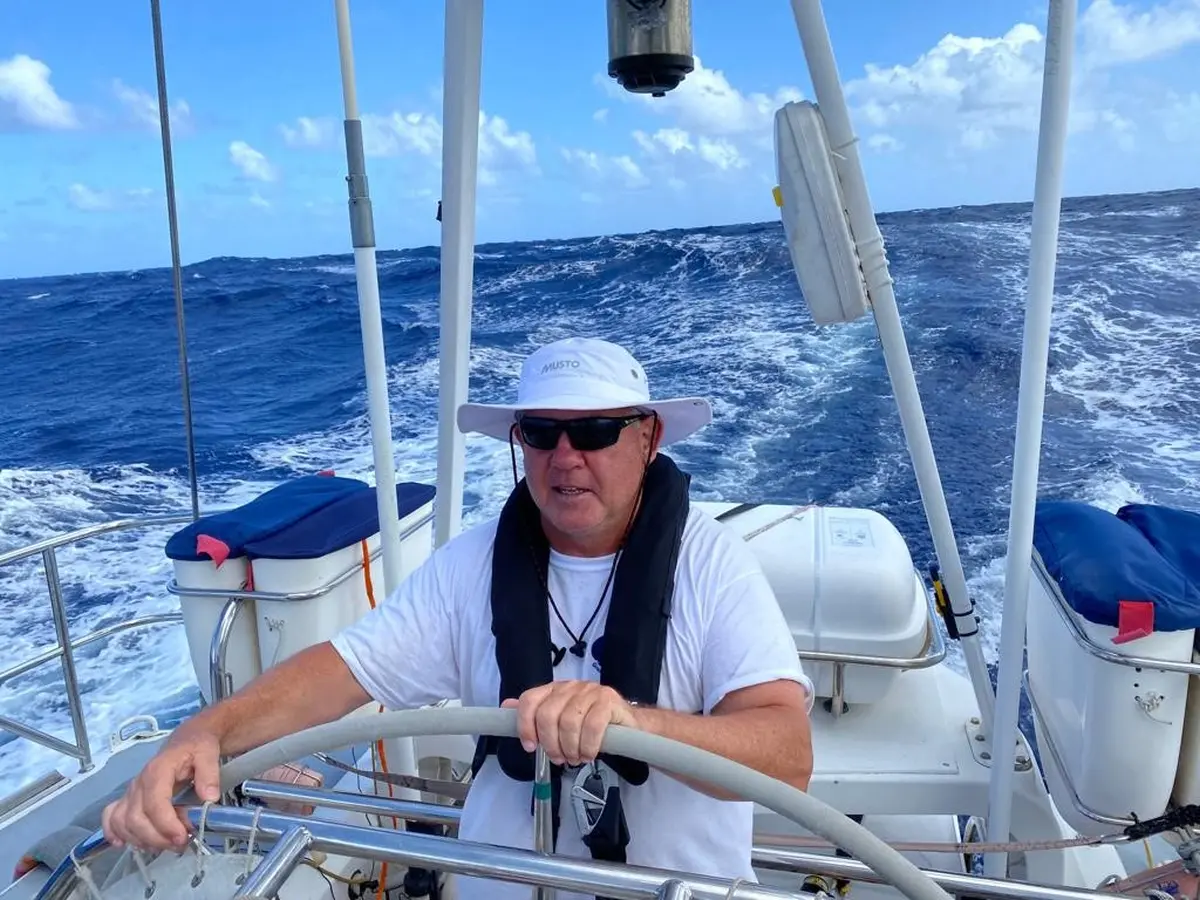
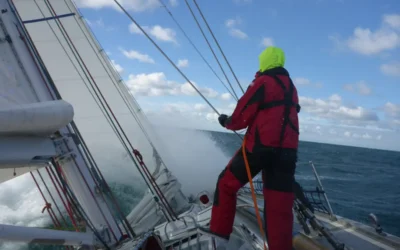
Fast performance yacht pushing hard under trade winds during ARC Rally crossing
Line honours have already been claimed, but with most of the fleet still underway, the wider story of this year’s crossing continues to develop daily. Weather routing choices, sail plans, squall management, and strategy across the tradewinds are shaping fortunes mid-ocean.
You can track positions live and check the current standings via the official ARC rally tracker:
👉 Track the fleet here using the official ARC results/leaderboard on the World Cruising Club website.
Stories That Stand Out This Year
One of the highlights of the ARC is always the contrast between boats and crews — luxury yachts sailing beside determined small-boat adventurers.
This year’s smallest entry, Heartbeat2 at just over 10 metres, is crossing with minimal comforts and huge spirit. Their effort embodies what the ARC is all about — seamanship, teamwork, and taking on the Atlantic under your own canvas.
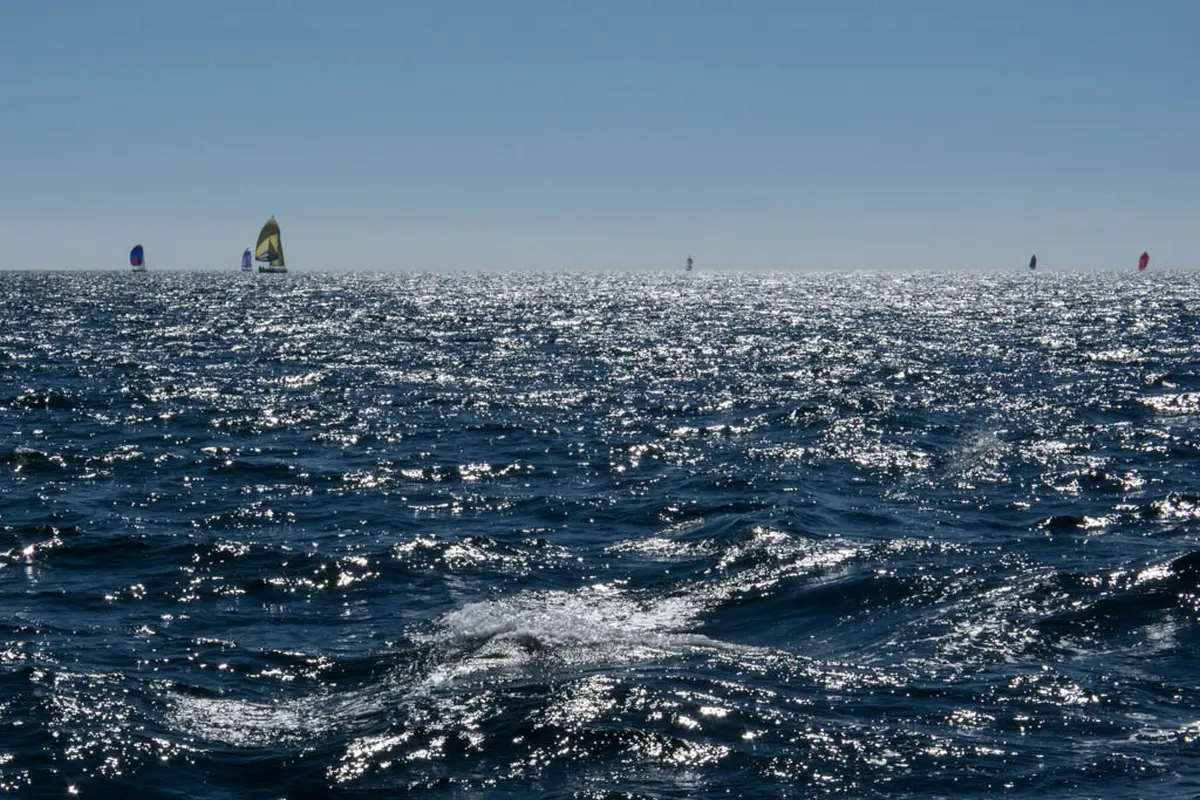
Small yachts in mid-Atlantic against a blue horizon
Meanwhile, larger multihulls and ocean-capable racers have already enjoyed fast reaching conditions, logging high daily mile runs. For many crews, friendships form over radio schedules and SSB check-ins; for others, it’s night-sky navigation, flying fish on deck, and the countdown to rum punches in Saint Lucia.
How Long Until the Finish?
The ARC finish line remains open until 19 December, with celebrations and prize-giving shortly after. Boats still at sea have time in hand, though routing choices and weather will define arrival windows.
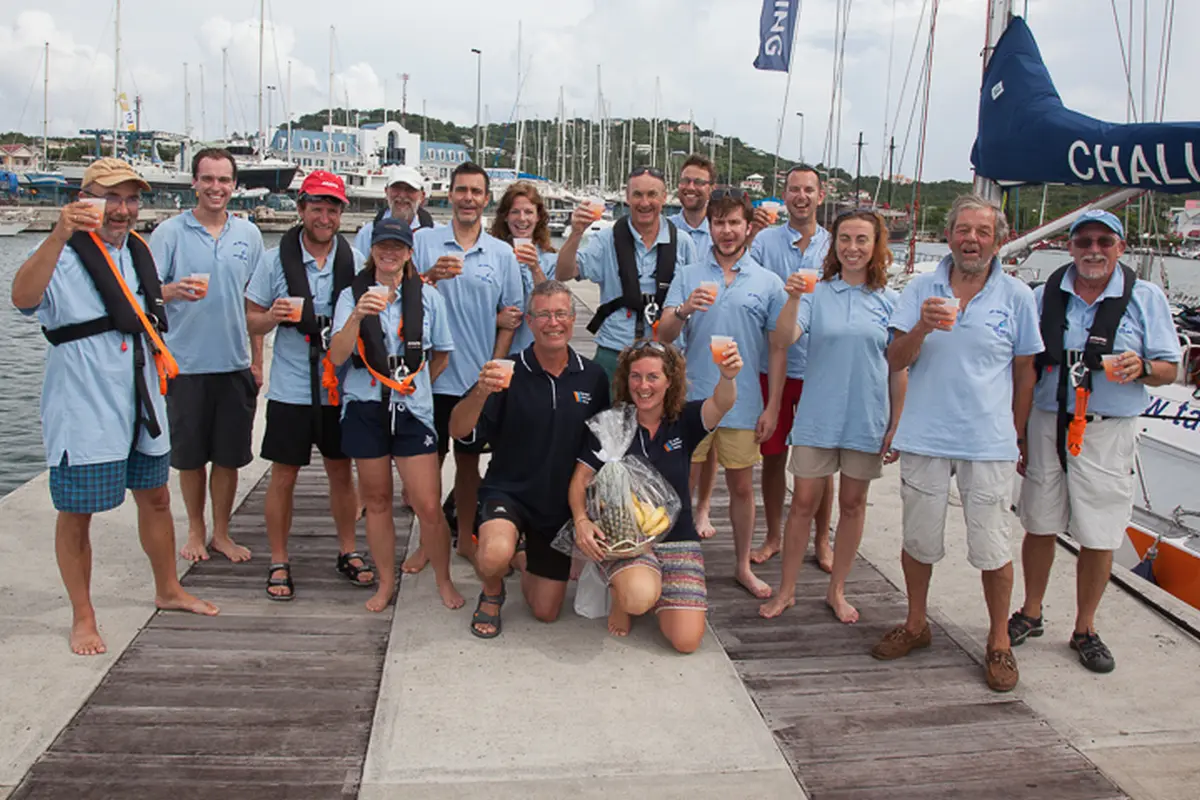
Celebratory drink on the dock upon arrival in Rodney Bay, St Lucia after crossing the Atlantic Ocean in the ARC
Optional supporting image
[Insert Image — Yacht entering Rodney Bay Marina, flags flying | Alt text: “Yacht arriving in Rodney Bay, Saint Lucia — ARC Rally finish destination”]
Those last miles can be some of the most emotional — sunrise after 3,000 miles of ocean, spotting land on the horizon, and the sound of steel drums welcoming crews to the Caribbean.
Thinking About Joining the ARC Yourself?
Many who follow the rally each year eventually end up on deck themselves. If the challenge of crossing an ocean with trade winds behind you sparks something inside — you’re not alone.
First Class Sailing will be entering ARC 2026, offering berths for sailors looking to take on the crossing as crew with professional support, preparation and training.
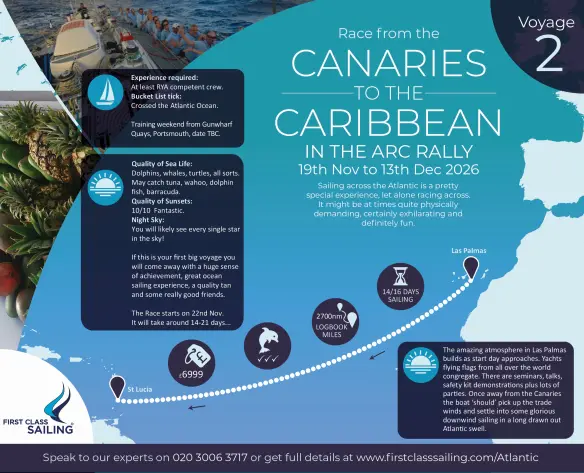
Sail in the ARC 2026
👉 Find out more or register interest for sailing the ARC Rally 2026 with us via our ARC programme (
Click here: Sail the ARC Rally 2026 with First Class Sailing